
A plant with a cup of tea and another stretched out over a book is a very effective way to win me over. LEGO Cozy Plants 10371 takes the expressive pots I enjoyed in Happy Plants and Rocking Plants and gives them two little activities that make the finished pair feel especially charming.
I built the set on November 2, 2026, and I think this is my favorite of those three plant sets. It is quick, easy and rewarding, although the tiny foliage pieces deserve a little more patience than the pots themselves. The brown reader is my favorite finished character, but Bag 1 was my favorite bag, even with its more repetitive plant assembly.
Both Cozy Plants characters complete after Bag 3.
At a Glance
Set: LEGO Botanicals Cozy Plants, 10371
Pieces: 248
LEGO age recommendation: 9+
Numbered bags: 3
Total recorded bag time: 24 minutes, 11 seconds
Difficulty bag average: 2.3/10
Repetition bag average: 4.0/10
Dexterity / connection-demand bag average: 3.0/10
Instructions used: LEGO Builder, with 155 steps recorded
Sticker count: Not recorded
View LEGO Cozy Plants 10371 on LEGO.com
Build Time and Ratings
My three bag timers add up to 24:11. I did not record whether those timers included photos, notes, breaks or setup, so this is a sum of my bag timings rather than a claim of uninterrupted hands-on building or total elapsed time. No separate overall-timer reading was recorded.
Difficulty describes understanding, orienting and executing the assembly. Repetition describes repeated placements and sub-builds, even when they are enjoyable. Dexterity describes small parts, precision and connection access. All three use a ten-point scale, with higher numbers meaning greater demands.
The published bag scores are editorial estimates based on my notes and a review of the printed instructions, not scores I recorded during the build. Each bag contributes equally to the averages. I did not assign a numerical overall set rating or instruction-complexity score, so my verdict below stays in words.
The Build, Bag by Bag
Bag 1: A purple pot with a cup of tea
Time: 14:00 · Difficulty: 3.0/10 · Repetition: 5.0/10 · Dexterity: 4.0/10
Editorial bag-score estimates.
The pot feels familiar if you have built the other cheerful plant characters. I found it simple to assemble and easy to follow, and the little smiling face, seated feet and cup immediately give it personality. It is a cute result before the plant is even finished.
The chamomile is where most of my time went. Its branches, leaves and flower heads involve a lot of small pieces and repeated work. The instructions repeat a leafy branch assembly three times and finish the plant with six matching flower heads, which explains the change in pace from the pot. It is not a complicated mechanism to understand, but there is more small-piece work to manage.
This was my longest bag and my favorite bag overall. That does not make the foliage my favorite part: the plant assembly was actually my least enjoyable section of the set. The completed tea-drinking character made the effort worthwhile.
Builder tip: Finish and check one repeated branch before making the remaining copies. Support the branch close to the connection when adding small leaves or flowers, rather than pressing through the full plant. The cup's white steam detail also deserves care when handling the finished pot.
Bag 2: The brown reading pot takes shape
Time: 6:05 · Difficulty: 2.0/10 · Repetition: 4.0/10 · Dexterity: 2.0/10
Editorial bag-score estimates.
The brown pot uses a similar building approach, but its different expression and lying-on-its-stomach pose keep it from feeling like a straight color swap. The pot is still upright enough to hold a plant, while the limbs give the character that relaxed reading posture.
This was another straightforward part of the build for me. There is some familiar wall and panel construction, but the change of orientation gives it its own character. At the end of this bag, the pot is ready for the plant and book that arrive next.
Builder tip: Compare the face and limb orientation with the current instruction view before joining the panels. The pose differs from the seated purple pot, so it is better to follow this character's layout than to build from memory of Bag 1.
Bag 3: Peppermint and an open book
Time: 4:06 · Difficulty: 2.0/10 · Repetition: 3.0/10 · Dexterity: 3.0/10
Editorial bag-score estimates.
The second plant was easier for me to assemble and felt less repetitive than the first. It still uses small pieces, especially around the purple flowers, but this was a much quicker finish. The broad leaves and taller central flower arrangement give it a different outline from the spreading chamomile.
LEGO identifies this plant as peppermint. The purple flowers might suggest something else at first glance, but I am using the set's official plant name here.
The book is a lovely final touch. It is a simple assembly, and the white sloped pages against the brown cover make it immediately readable as an open book. Putting that in front of the relaxed pot finishes the little scene beautifully. If I had to choose just one of the two characters, this would be it.
Builder tip: Finish the plant's small connections before placing it in the pot. When moving the model afterward, lift from the pot, not the foliage.
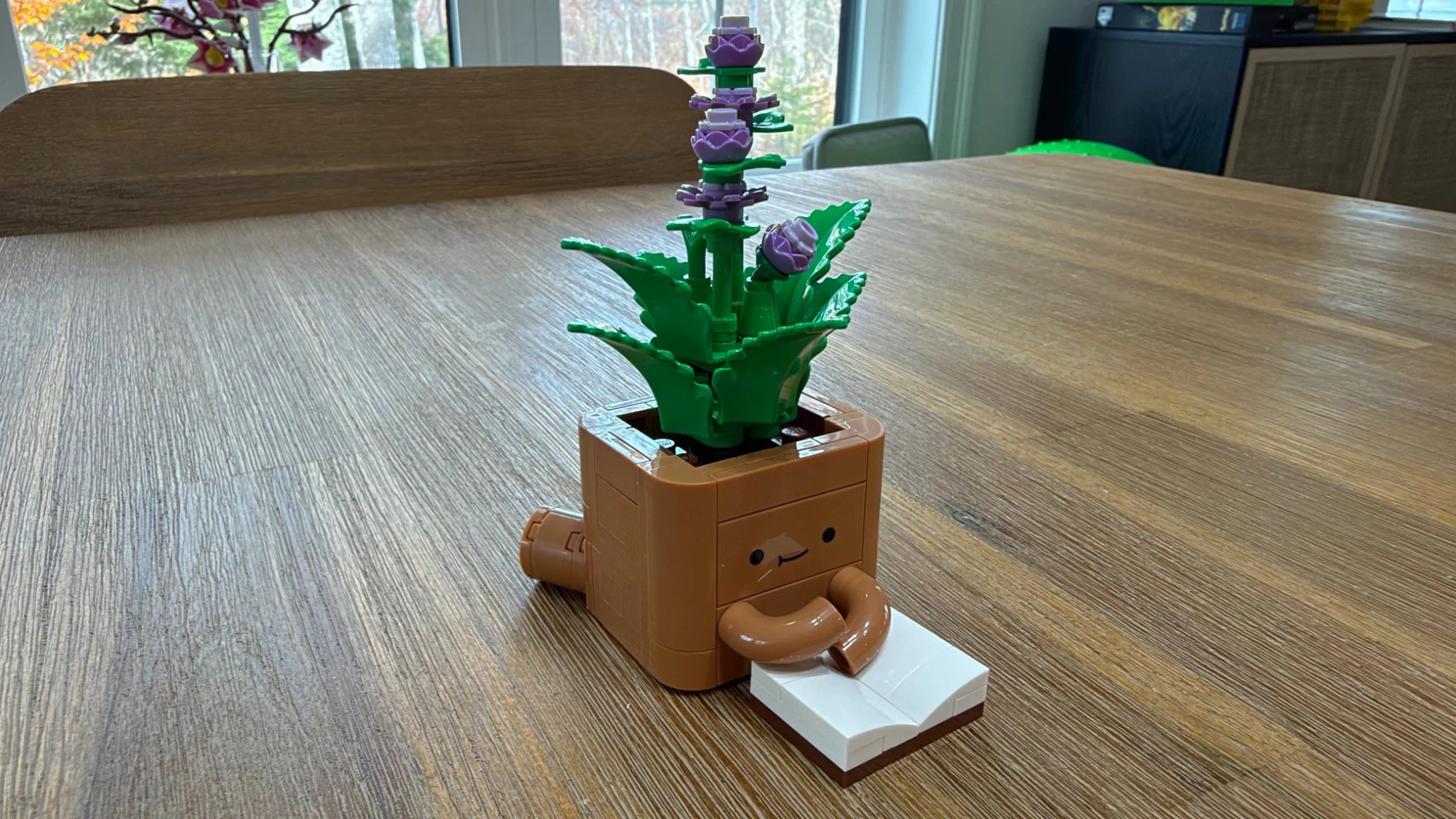
The finished brown reader, my favorite of the two pots.
Build Progress
From three numbered bags to two finished characters, followed by their place in my wider LEGO plant collection.
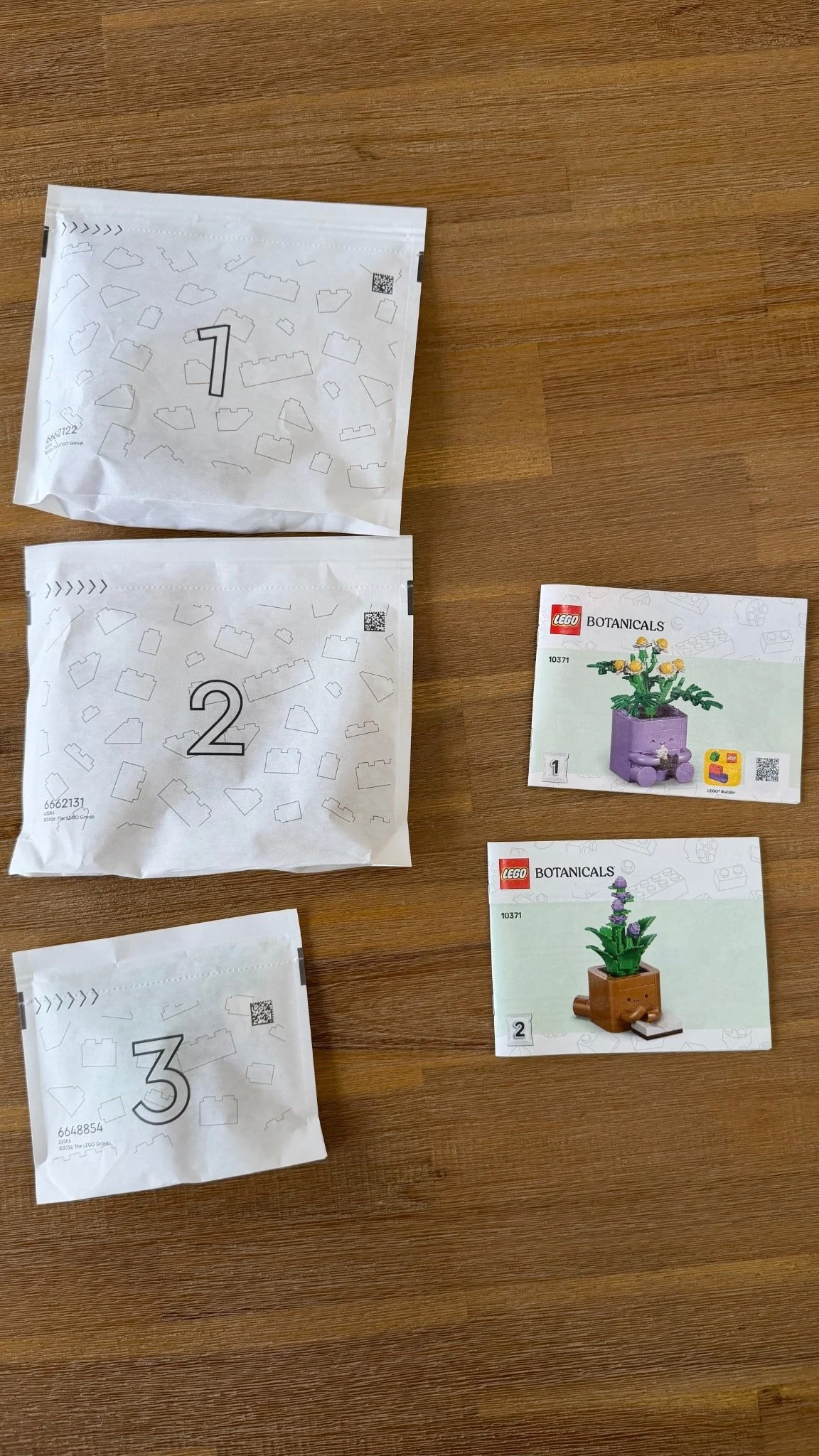
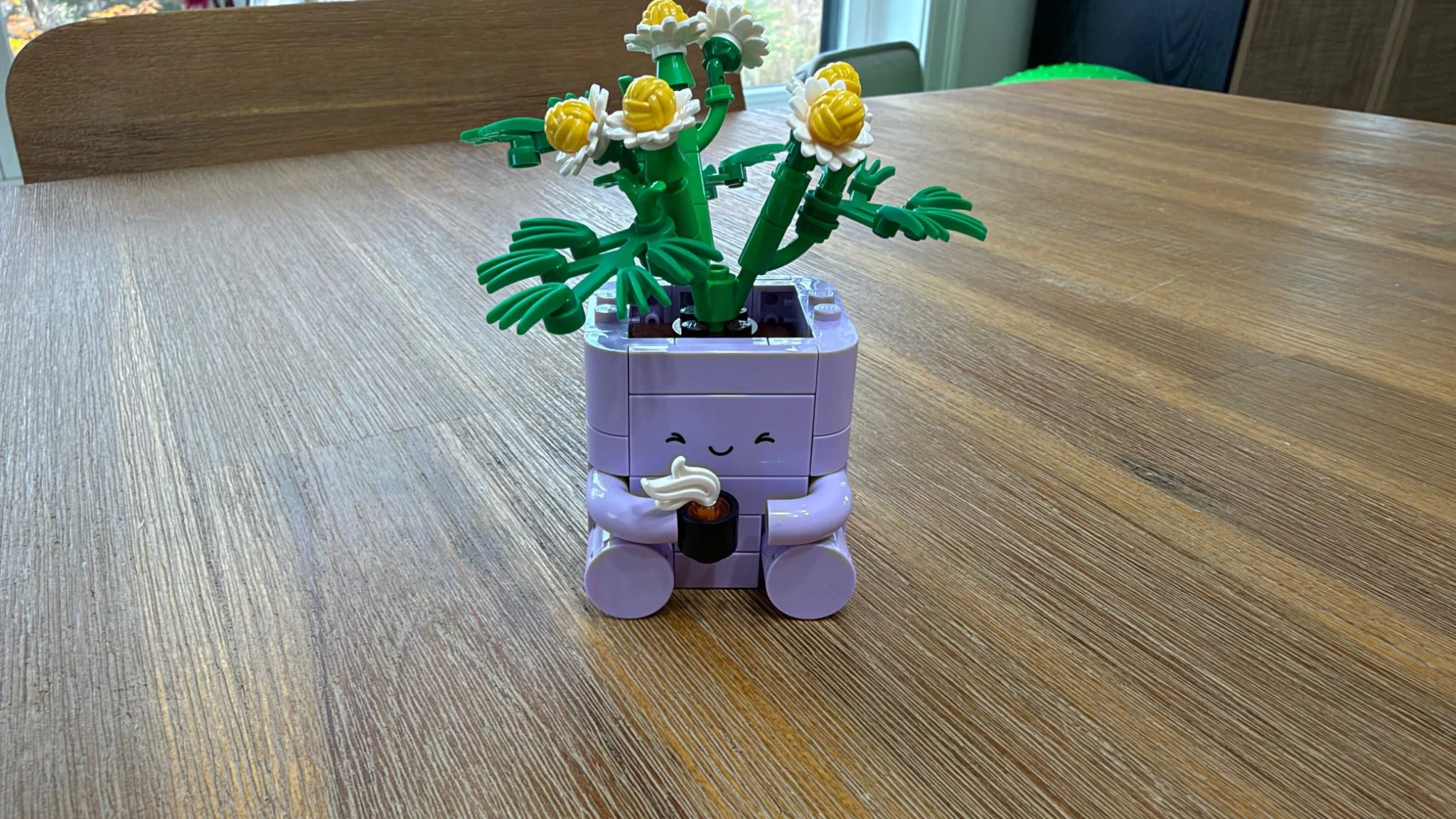
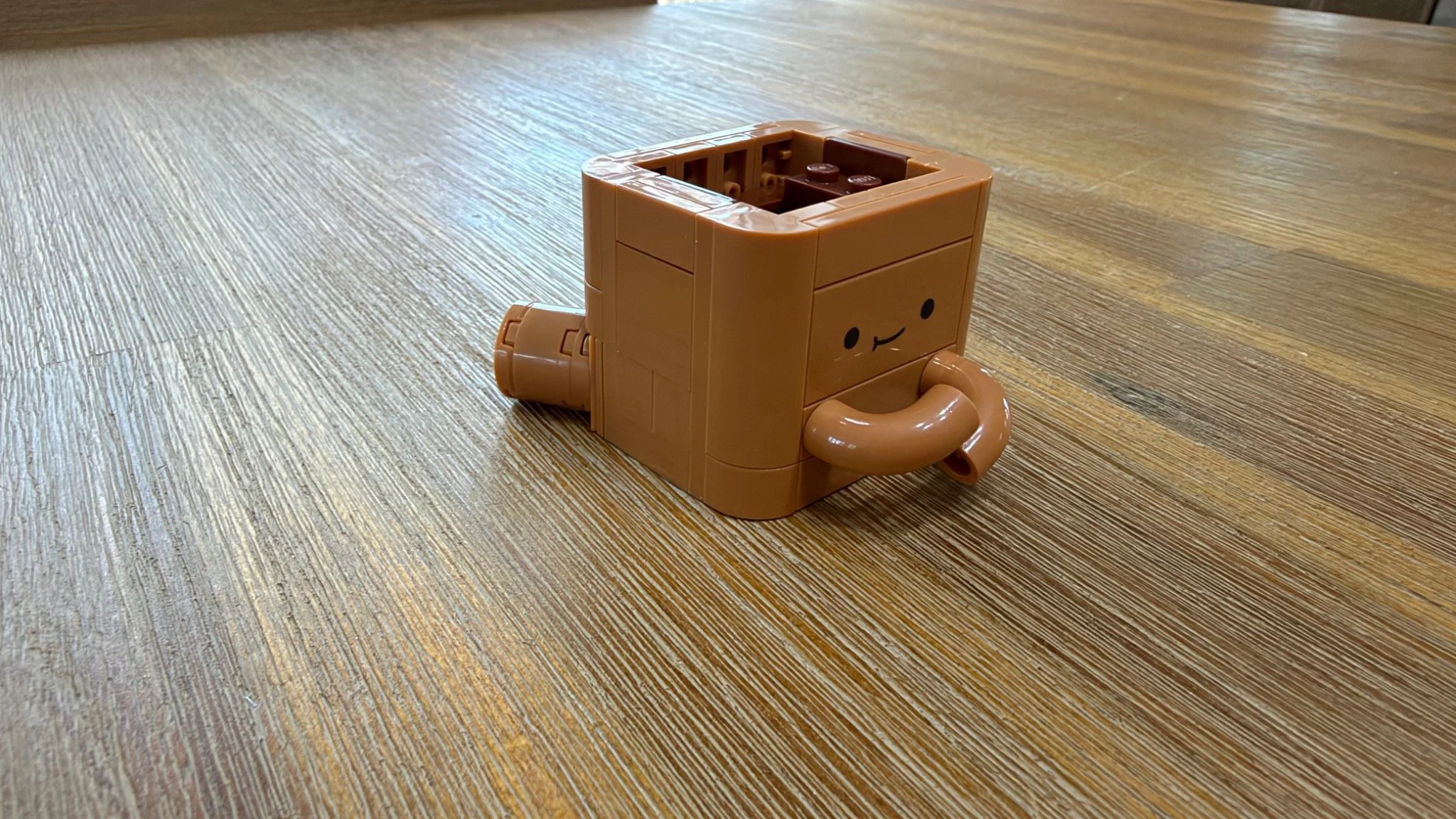

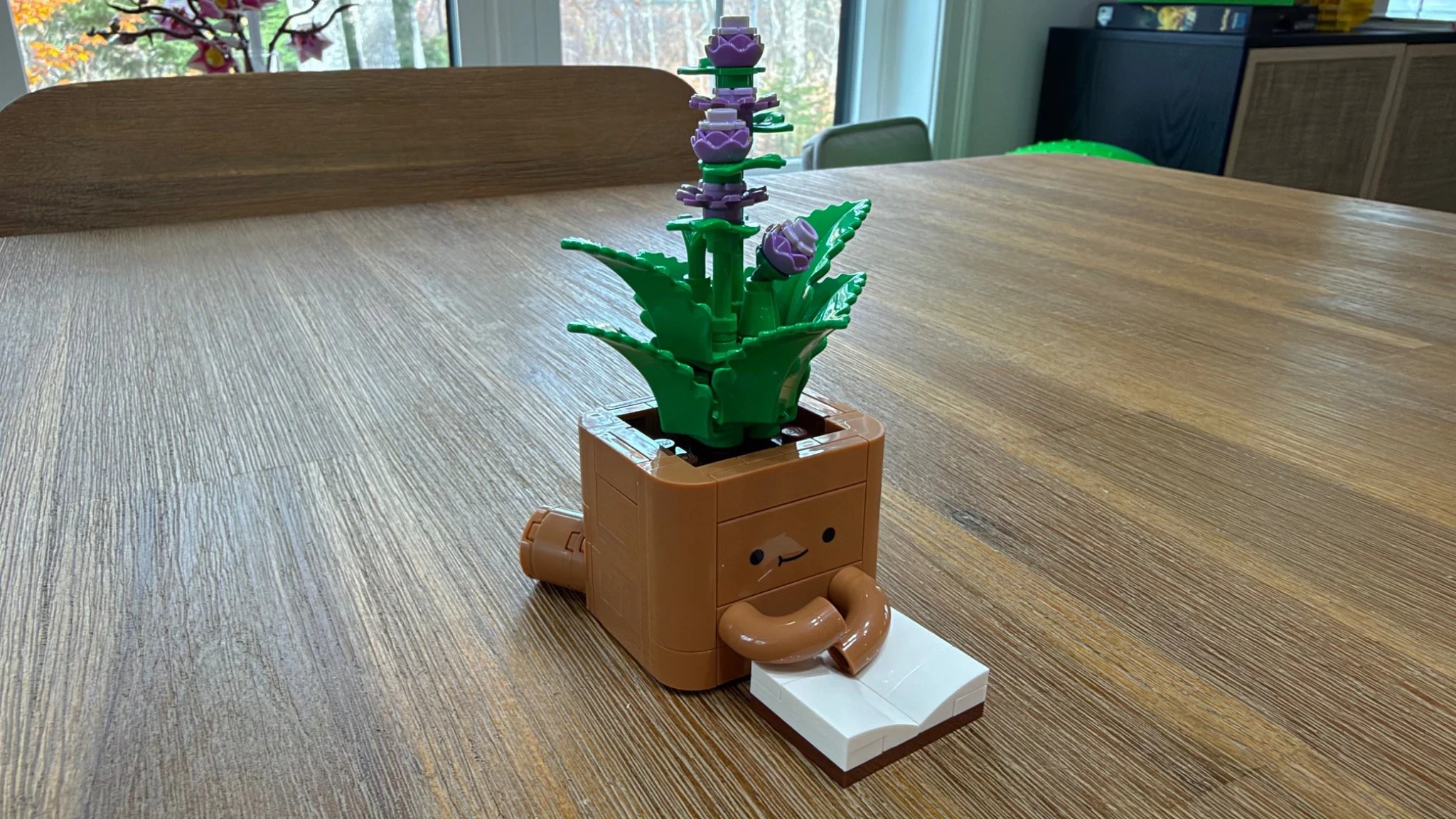
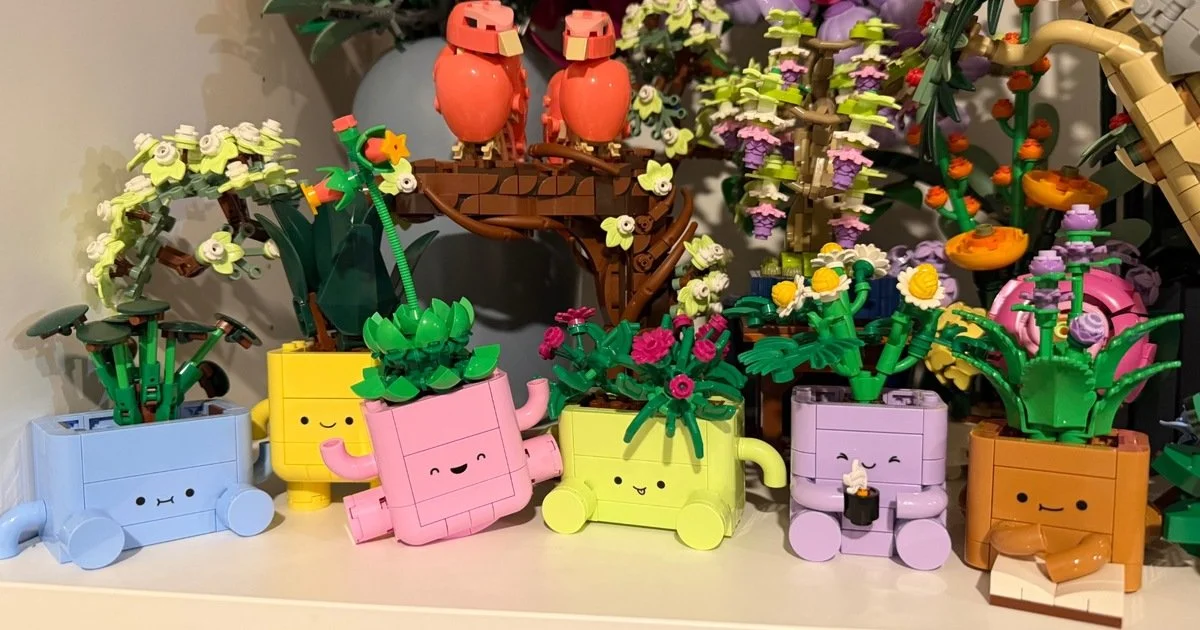
Photo stages: 1: bags and booklets. 2: finished purple pot. 3: brown pot before foliage. 4–5: completed models after Bag 3. 6: shelf display with other sets.
Little Details That Make the Pair Work
The tea cup and book are what make this pair stand out for me. The purple pot looks content with its warm drink, while the brown one seems settled in for a good read. Neither needs a complicated feature to communicate what it is doing.
The cup gets a small white steam element, and the book uses a few well-placed slopes to suggest its open pages. They are modest additions, but they do a lot for the finished display. The expressions and different body positions help the pots feel like two characters rather than matching containers.
LEGO describes the plants as interchangeable between the pots. I did not record a swap test, so I would treat that as an advertised customization option rather than a function I evaluated during this build.
Stability, Handling and Display
The pots were very stable in my handling, but the plants did not connect tightly to them. I would move each model by its pot and keep the foliage supported as needed. A stable base does not make the plant a safe carrying handle.
The finished pair is small, cute and easy to enjoy together. My shelf photo shows them alongside other plant characters, but I did not measure a required shelf footprint. As a display suggestion, leave space in front of the brown pot so its book remains visible, and give the plants enough room that the outer leaves do not overlap nearby models.
My Verdict
Cozy Plants is my favorite of the Happy Plants, Rocking Plants and Cozy Plants sets I have built. I love both pots, especially the brown reader, and I would happily build this set again. It is a quick project with a very satisfying finished result.
My main reservation is the small-piece plant work, particularly the repetition in Bag 1. A newer builder might find that section more frustrating than the simple pots suggest. Taking it slowly is worthwhile, and helping with the foliage would be a sensible place for a more experienced builder to step in.
I would recommend it to Botanicals fans, people who enjoyed the earlier expressive plant sets, or someone looking for an adorable LEGO gift with a straightforward build and plenty of display personality. I have not scored its value against a recorded purchase price, but as a building experience, this little pair made me happy.
More From My Workbench
For another nature-themed build with a very different scale, read my Family of Koalas 31388 review. For more decorative foliage, try my Halloween Wreath 40825 review.
You can also browse all of my Build Guides.
Need Help With a LEGO Set of Your Own?
The Bricksmith helps with new set assembly, rebuilding and organizing LEGO collections. I am based in North Yarmouth, Maine, with local pickup and return around Greater Portland. Select mail-in projects are considered after assessment.
Send a few photos and tell me what you would like the finished result to be. You do not need to know which service fits before reaching out. Explore the services, or start with a free photo assessment.