
LEGO® Halloween Wreath 40825 Build Review
A simple structural build gives way to a much more detailed Halloween decoration, with plenty of repetition early on and meticulous small-piece work in the second half.
I built LEGO® Halloween Wreath 40825 from start to finish to see where the build becomes repetitive, which sections require the most dexterity, and how the finished wreath feels once everything is connected.
My build time: 2 hours · Difficulty: 3/10
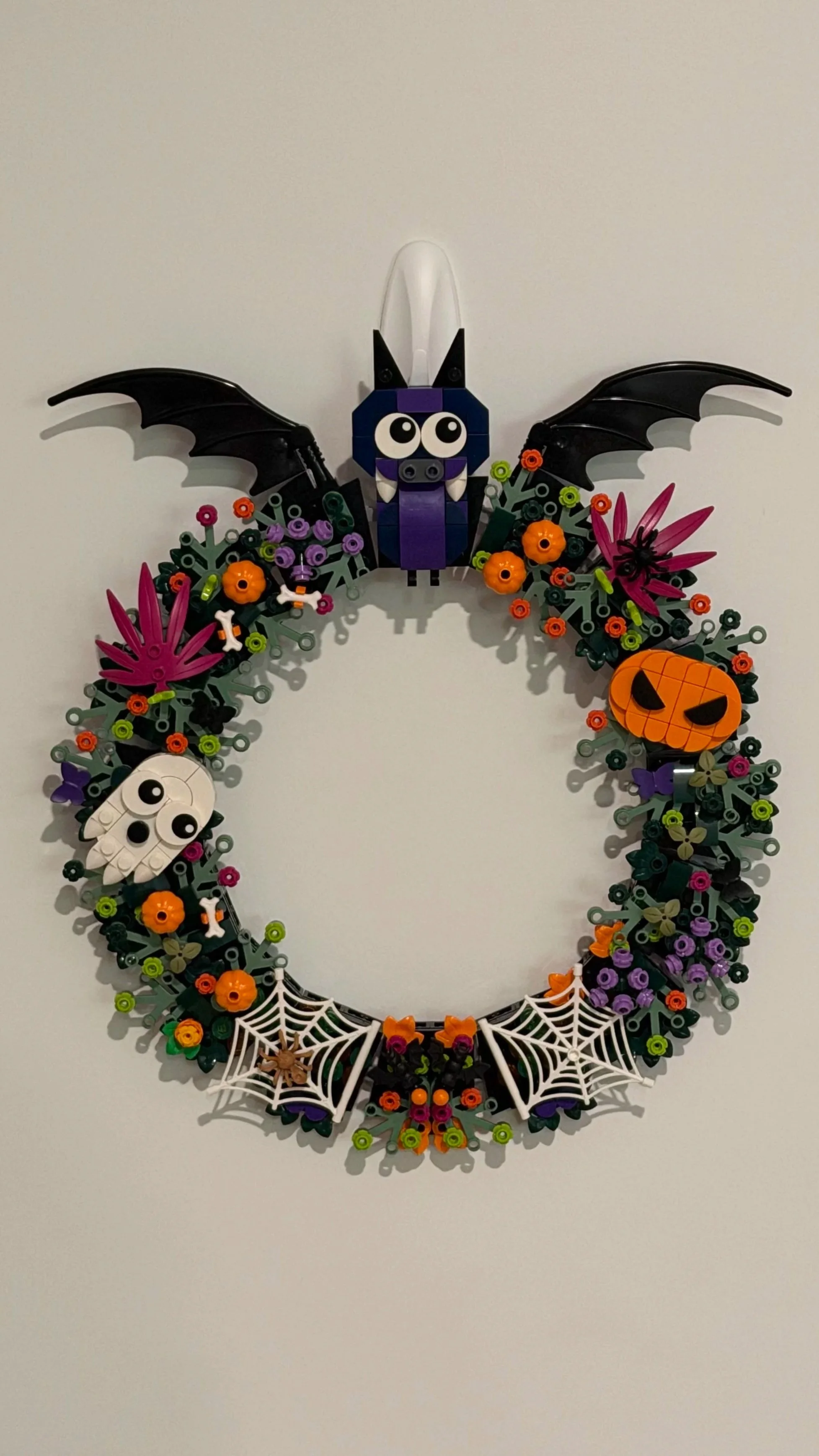
The finished Halloween Wreath combines pumpkins, flowers, spider webs, a ghost, and a large bat into a surprisingly detailed seasonal display.
Halloween Wreath 40825 at a Glance
Pieces: 617
Bags: 5
My build time: 2 hours
My difficulty rating: 3/10
Finished stability: Excellent
Recommended age: 12+
Finished size: Over 11 in. / 29 cm high and 10 in. / 26 cm wide
LEGO describes Halloween Wreath 40825 as a reusable seasonal decoration featuring a large bat, pumpkins, a ghost, and a spider web. The completed wreath includes a string for hanging on a wall or door.
Official set information: LEGO® Halloween Wreath 40825
The Short Version
Halloween Wreath is an approachable build with a noticeable split personality.
The first half is primarily structural. It begins quickly and easily before Bag 2 introduces the most repetitive part of the entire project: building 13 nearly identical sections that form the circular wreath frame.
Once the structure is finished, the experience changes considerably. Bags 3 through 5 replace repetition with a large number of tiny flowers, plants, pumpkins, Halloween details, and decorative connections.
None of the construction is particularly complicated, which is why I rate the overall difficulty at 3/10. The challenge instead comes from patience, precise placement, and finger dexterity as the wreath becomes increasingly crowded.
The payoff is excellent. The simple black frame gradually disappears beneath layers of colorful decoration, and the finished model feels much more substantial and detailed than the early stages suggest.
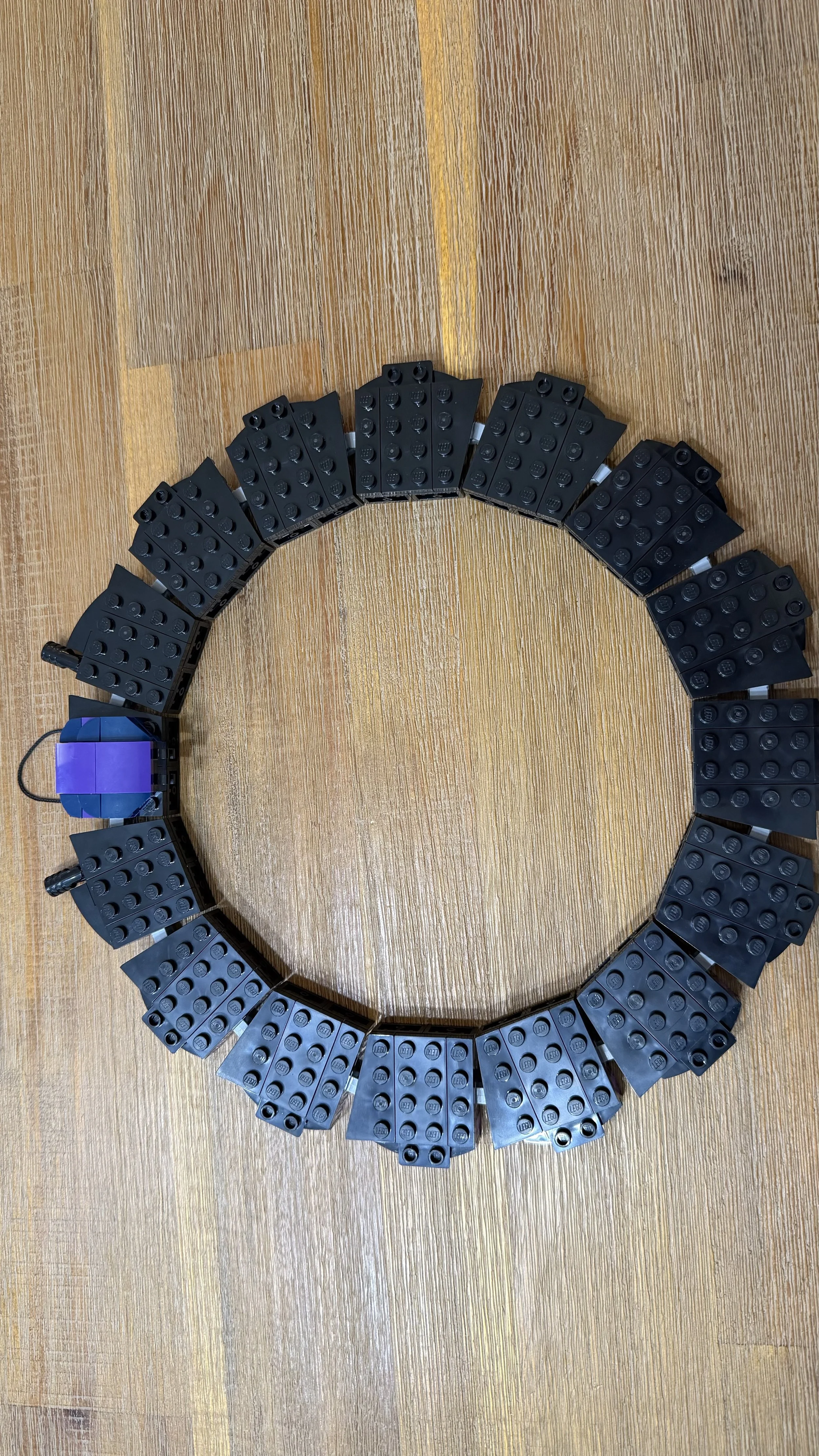
Before the decorations arrive, the build is essentially a circular framework made from repeated modules.
What Is Halloween Wreath Like to Build?
This set has one of the clearest transitions between structural building and decorative building that I've encountered.
Bag 1 is exceptionally quick. You begin with the top of the wreath, including the central bat body and hanging assembly, and the few Technic connections involved are straightforward.
Then comes Bag 2.
This is easily the most repetitive part of the build.
The majority of the bag is devoted to creating 13 similar wreath-frame sections using essentially the same construction you learned in Bag 1. The individual assemblies aren't difficult, but completing them one after another can become monotonous.
Once they're connected into a full circle, however, the design makes sense. The repeated modules create a sturdy foundation that supports everything added later.
From Bag 3 onward, the experience changes completely. Instead of constructing large repeated sections, you begin layering dozens of small decorative elements across the frame.
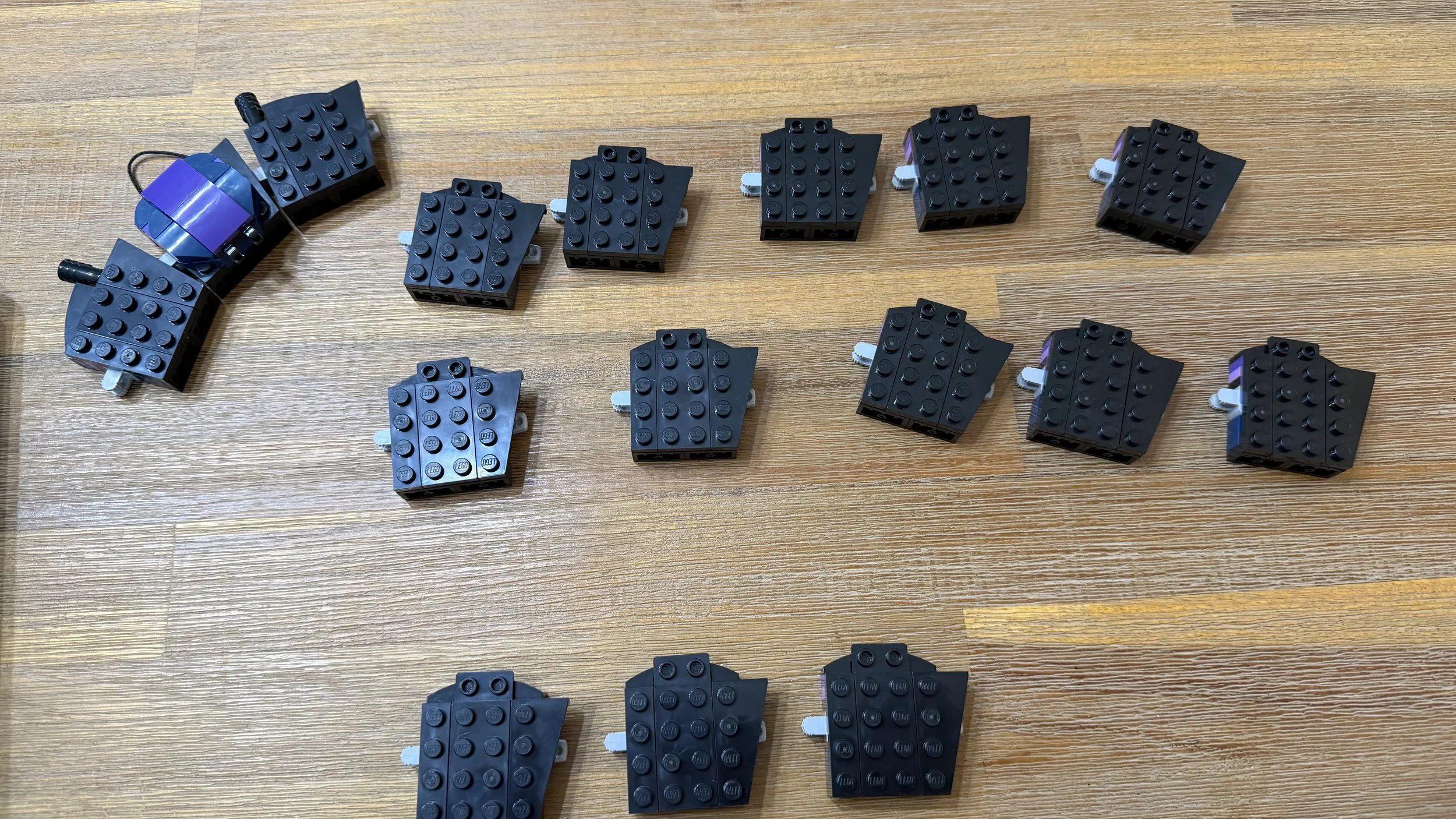
Bag 2 is where repetition peaks, with 13 nearly identical modules forming most of the wreath's structural frame.
Where the Build Gets Difficult
My overall difficulty rating is 3/10.
Halloween Wreath isn't difficult because of complicated techniques or confusing structural engineering. Instead, the second half increasingly tests patience, precise placement, and finger dexterity.
Bags 3 through 5 contain large quantities of tiny flowers, stems, foliage, translucent pieces, and Halloween decorations. As those pieces accumulate, two things become more important.
First, placement matters. Putting one small element in the wrong location can make later instructions harder to interpret and the error difficult to find.
Second, the wreath becomes physically crowded. Later pieces sometimes need to be maneuvered around decorations that are already installed.
I found it helpful to identify and separate the required small pieces before beginning each step. That reduced the chance of overlooking one of the many tiny elements.
A few specific connections are noticeably more delicate. The flower stems containing several individual flowers require careful assembly, and the small bat attachment can easily be knocked loose while being connected to the wreath.
This should be a very manageable build for most builders, but the small decorative work requires more concentration than the 3/10 difficulty rating might initially suggest.
Bag-by-Bag Build Notes
Bag 1: A Quick Start
Bag 1 has a low piece count and takes less than 10 minutes.
The build begins at the top of the wreath, creating the body of the large bat and the hanging assembly. The instructions are simple and the few Technic elements are easy to connect.
There are a handful of pieces where orientation matters, but the instructions do a good job making their positioning clear.
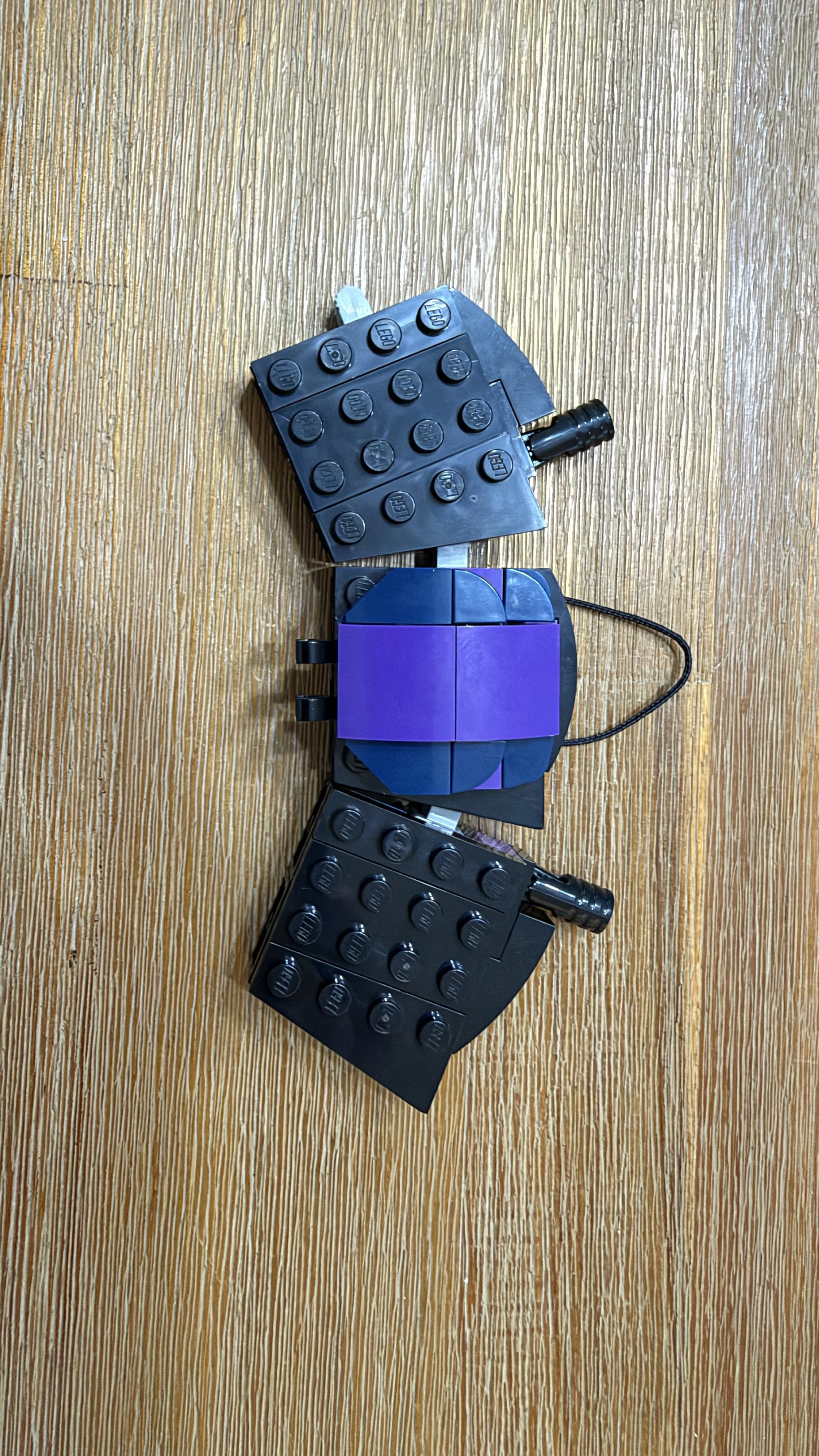
Bag 1 establishes the top of the wreath, including the hanger and central bat structure.
Bag 2: Holy Repetition
Bag 2 has more pieces and takes less than 20 minutes.
Holy repetition.
This bag is almost entirely dedicated to building out the wreath's circular foundation using 13 duplicate frame assemblies.
Because you've essentially learned the construction method during Bag 1, none of these sections is particularly difficult. Repeating them 13 times, however, does become boring.
The payoff comes at the end when the individual modules connect through Technic elements and suddenly form a complete circular frame.
It's repetitive construction, but it creates an impressively stable foundation.
Bag 3: The Decoration Begins
Bag 3 takes roughly 25 minutes and shifts the build dramatically toward smaller decorative pieces.
This is where the wreath finally starts developing its Halloween personality.
There is a lot of meticulous flower placement, and the smaller pieces require more dexterity than anything in the first two bags. Accurate placement also matters because a misplaced flower or leaf can become surprisingly difficult to identify later.
Pre-selecting the pieces required for each step was particularly helpful here.
The highlights are building the first pumpkin face and adding the black spider. Sloped pieces are also used cleverly to give additional support to the foliage.
By the end of Bag 3, you finally get a moment where the finished design becomes easy to envision.
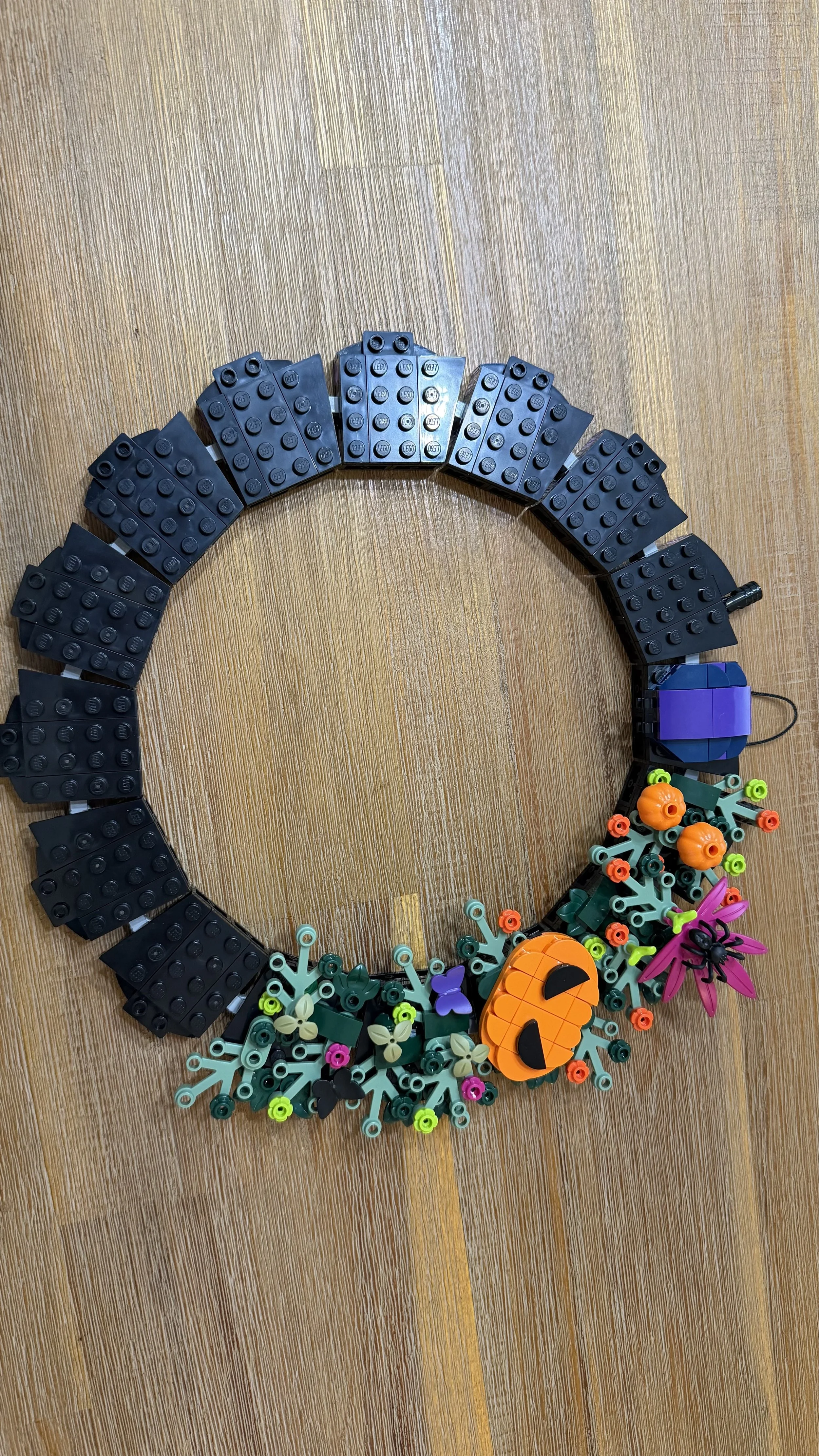
Bag 3 is the turning point where the plain black frame starts becoming a colorful Halloween decoration.
Bag 4: Details, Flowers and Delicate Connections
Bag 4 takes around 30 minutes and continues the decorative approach from Bag 3.
Small flowers dominate the bag. Some of the multi-flower stem assemblies can be tricky to construct because several tiny elements need to be positioned closely together.
The translucent orange and green round pieces are a particularly nice visual detail.
This bag also introduces the first connection I would describe as genuinely delicate: attaching the smaller bat to its peg. The connection itself isn't complicated, but the completed bat is easy to knock loose while positioning it on the wreath.
At this point, the growing amount of decoration also means you need to be slightly more careful when handling the entire model.
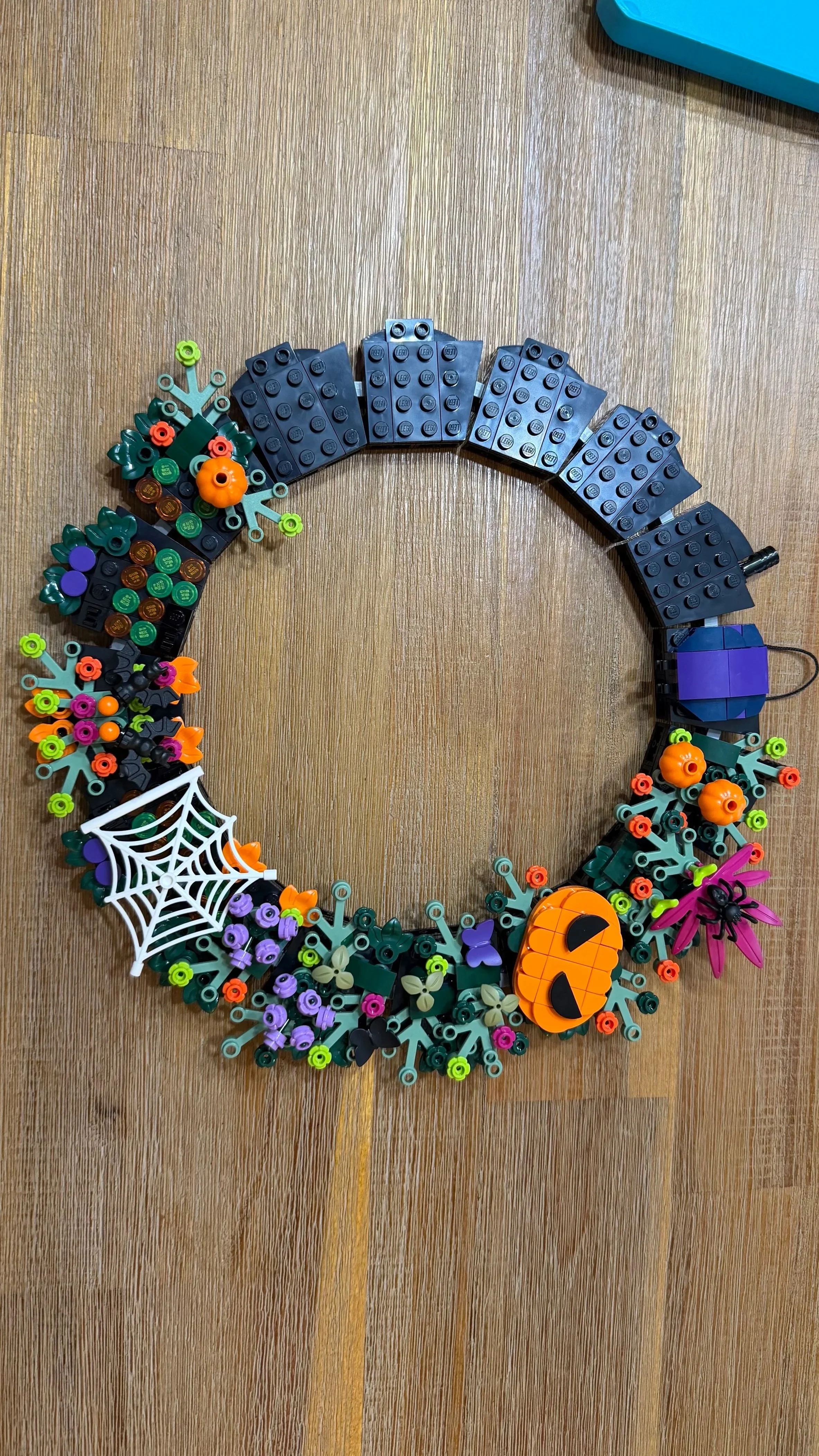
By Bag 4, the wreath has become dense enough that accurate placement and careful handling matter much more.
Bag 5: The Most Detailed Bag
Bag 5 is the longest section at roughly 40 minutes.
The assortment is similar to Bags 3 and 4, but the increasingly crowded wreath makes it somewhat harder to determine exactly where certain pieces need to attach.
Existing decorations can also get in the way while you're positioning new elements.
The ghost assembly is a particularly fun and creative break from the repeated floral work. After so many tiny decorative elements, building such a recognizable character is refreshing.
Saving the large bat's head and wings for the end is another smart design choice. They provide a satisfying visual finish and make the model suddenly feel complete.
Bag 5 requires the most attention, but it's also where the build provides some of its best rewards.
Display Quality and Stability
The finished wreath is much more visually impressive than its simple structural frame suggests.
Pumpkins, flowers, foliage, butterflies, spiders, webs, the ghost, and the oversized bat create a dense seasonal display without completely hiding the circular wreath shape underneath.
The structure itself also works well. Connecting the repeated frame modules through Technic elements creates a sturdy circle, and I found the completed model easy to reposition without feeling like the foundation was flexing or separating.
LEGO includes a string specifically for hanging the finished wreath on a wall or door.
The finished model measures just over 11 inches high and 10 inches wide, so it has enough presence to work as a seasonal decoration without requiring an enormous display area.
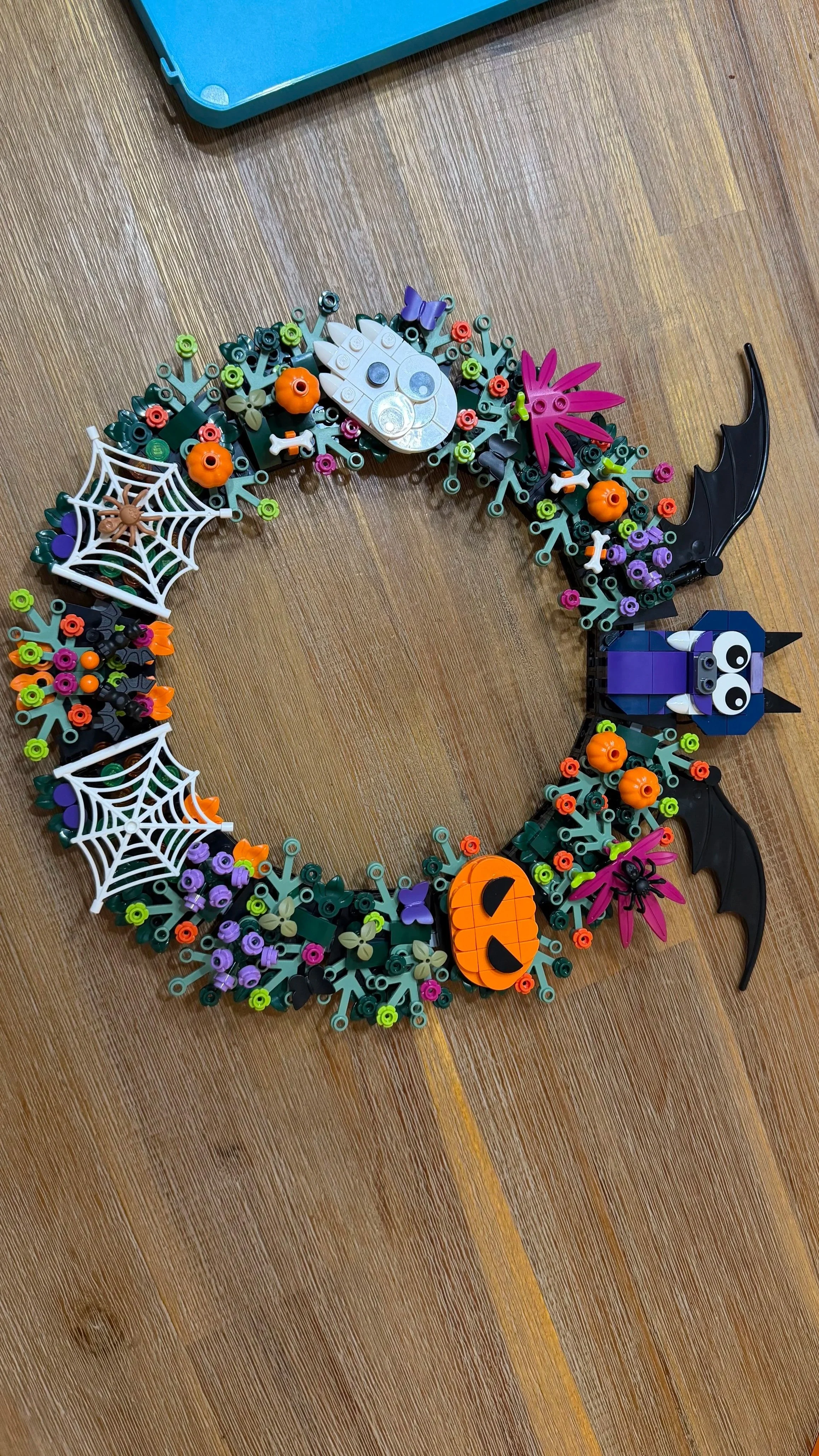
After a very plain structural beginning, the finished wreath becomes a dense and colorful Halloween display.
Who Will Enjoy This Build?
Halloween Wreath is a particularly good choice if you enjoy:
Seasonal LEGO® displays
Decorative and botanical-style builds
Lots of small detail work
Halloween-themed models
Builds that can be displayed rather than simply placed on a shelf
Seeing a simple structure transform dramatically as details are added
You may enjoy it less if you dislike:
Repeated subassemblies
Large quantities of tiny decorative pieces
Precise flower and foliage placement
Builds where already-installed details can get in the way
The biggest tradeoff is straightforward: the first half can feel repetitive, while the second half demands patience. The finished model makes both phases worthwhile.
Final Verdict
Repetitive at First, Detailed and Rewarding by the End
LEGO® Halloween Wreath 40825 is an approachable seasonal build whose finished appearance is considerably more interesting than its early construction stages suggest.
Bag 2 is unquestionably the weak point. Building 13 similar frame modules isn't difficult, but it does become monotonous.
Fortunately, almost everything after that moves in the opposite direction. Bags 3 through 5 continually introduce new flowers, foliage, pumpkins, creatures, and decorative techniques until the plain black structure has almost completely transformed.
The build never becomes technically difficult, although the quantity of small pieces and increasingly crowded workspace demand more precision toward the end.
Most importantly, the underlying structure feels sturdy and the finished wreath delivers exactly what a seasonal display set should: something distinctive enough that you'll actually want to bring it back out every Halloween.
Build time: 2 Hours
Difficulty: 3/10
Best feature: Finished decorative detail
Biggest drawback: Repetitive frame construction
Most enjoyable moment: Watching the plain frame transform during Bags 3–5
My verdict: Halloween Wreath is easy to recommend for builders who enjoy seasonal display pieces and detailed decorative work, provided they don't mind one very repetitive structural bag.
Want the Finished Set Without the Build?
The Bricksmith provides professional set assembly, rebuilding, disassembly, sorting, and restoration services.
If you own Halloween Wreath or another set and would rather have the finished model than complete the build yourself, send the set number or a few photos. You'll receive a written scope, price, estimated timing, and handoff plan before deciding whether to proceed.