
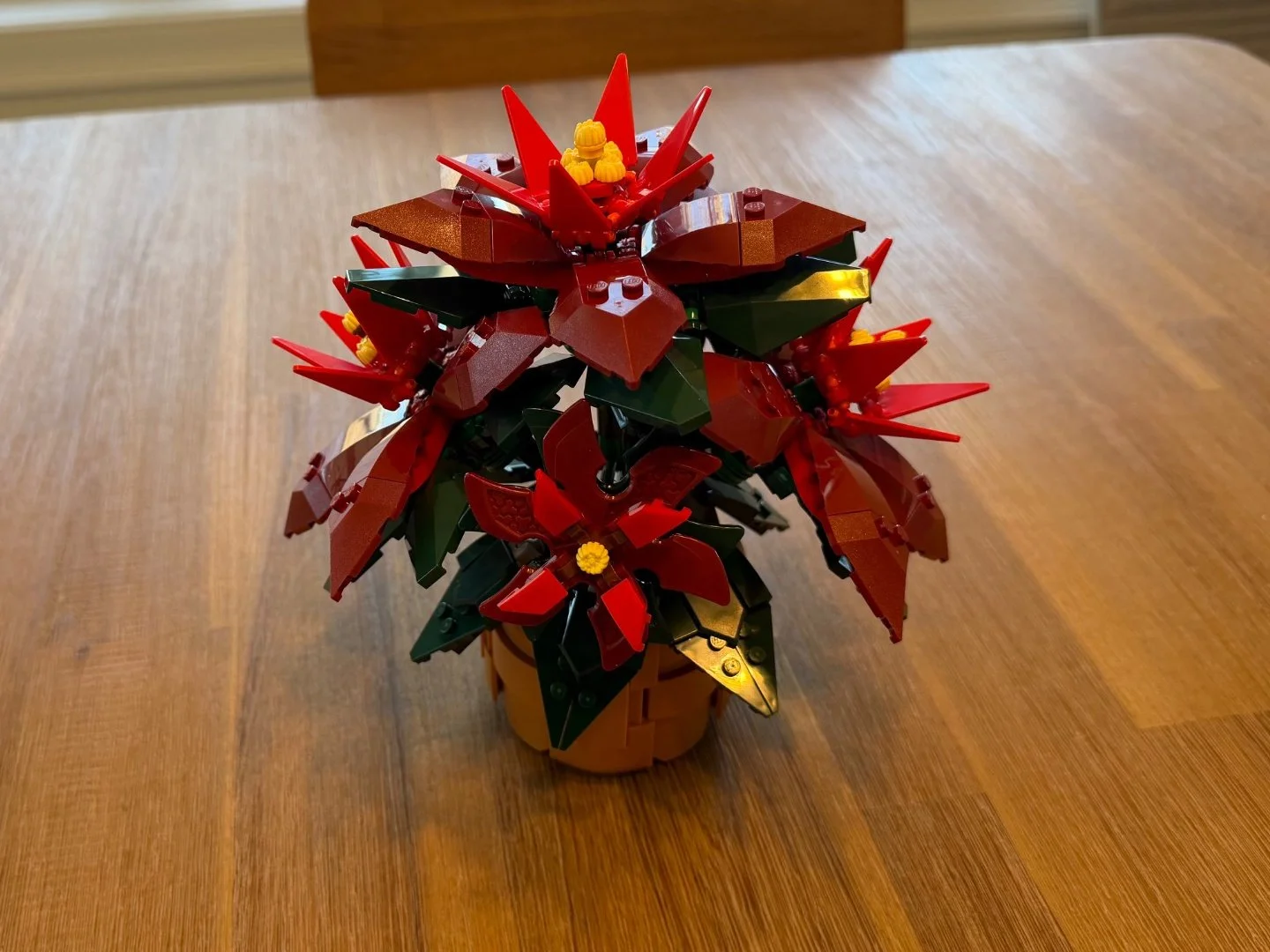
LEGO Poinsettia 10370 after the final bag.
I wanted a Christmas botanical that would look at home on a countertop or our dining table. LEGO Poinsettia 10370 fits that idea nicely: a small pot, deep red leaves and enough presence to feel festive without taking over the room.
The build was less memorable than the finished display. I enjoyed putting the pot together, and the flowers are easier than some of the other botanicals I have built. By the time I reached the third large flower, though, I was ready to finish. A handful of firm connections also demanded more care than the straightforward steps might suggest.
My overall rating is 6.4/10. I will happily bring this plant back out for Christmas, but I would not choose to take it apart and build it again for my own enjoyment.
At a Glance
Set: LEGO Poinsettia 10370, LEGO Botanicals
Pieces / age mark: 608 / 18+
Build date: November 17, 2026
Numbered bags: 6
Reported LEGO Builder time: 1 hour, 8 minutes, 36 seconds
Reported app pace: 8 bricks per minute
Steps: 171 reported in LEGO Builder; the booklet numbers its main steps 1–75 and reuses the same sequence for Bags 4 and 5
Bag times below: Estimated from instruction parts workload and scaled to my reported app total
Bag-average difficulty: 3.2/10
Bag-average repetition: 6.7/10
Bag-average dexterity: 4.5/10
My overall set rating: 6.4/10
Stickers: 0, confirmed in my build notes
Favorite bags: 1 and 2, building the pot
Price I paid: $28 at Walmart during a Black Friday promotion
LEGO U.S. price: $49.99 when checked November 17, 2026
Official dimensions: Over 8 inches high, 8.5 inches wide and 6.5 inches deep, including the pot
Affiliate disclosure: I may earn a commission if you purchase through the LEGO.com links in this review, at no additional cost to you.
View LEGO Poinsettia 10370 on LEGO.com
Build Time and Ratings
The 1:08:36 total comes from my recorded LEGO Builder statistics. The individual bag times are estimates, allocated by the number of construction parts used in each bag and adjusted to sum to that total. They are not individual stopwatch readings or a prediction of how quickly someone else will build. The seconds make the allocation add up; they do not make it precise to the second.
My reported pace of 8 bricks per minute does not exactly match the instruction tally divided by the total time. The total remains the timing anchor, so that mismatch does not change the bag allocation.
The bag scores are editorial estimates based on my written experience and the instructions. Difficulty describes understanding and executing the assembly; repetition describes repeated placements and sub-builds; dexteritydescribes precision, access and connection demands. Each bag gets equal weight in the averages. Those estimates are separate from my own 6.4/10 overall verdict.
The Build, Bag by Bag
Bag 1: The pot starts well
Estimated bag time: 10:30
Difficulty: 2.0/10 · Repetition: 4.0/10 · Dexterity: 3.5/10
The first bag builds the pot’s internal frame and begins its outer surface. I found this simple and enjoyable. It has repeated placements around the structure, but there is enough going on to make it a pleasant start.
Some of the smaller pieces need a firm connection in a tight space. That is a localized handling issue rather than a complicated construction sequence, but it could matter if small, firm presses are uncomfortable for you.
My tip here would be to support the structure close to the piece you are attaching. A straightforward diagram does not necessarily mean every connection will feel effortless.
Bag 2: Finishing my favorite part
Estimated bag time: 11:04
Difficulty: 2.5/10 · Repetition: 6.0/10 · Dexterity: 3.0/10
Bag 2 finishes the pot’s exterior and starts the stems. There are plenty of repeated steps, especially while adding the outer panels, but the changes in pieces and the spacing between repeated sections softened that repetition for me.
This was one of my favorite bags alongside Bag 1. The curved outer pieces give the pot its finished shape, and I enjoyed seeing the internal structure disappear behind them.
The useful check is panel orientation before attaching each repeated section. Once the pot is finished, the first stem connections give a better sense of how the plant will spread above it.
Bag 3: Leaves, small flowers and firmer connections
Estimated bag time: 12:26
Difficulty: 4.5/10 · Repetition: 6.0/10 · Dexterity: 5.5/10
The plant starts taking shape with its green leaves and two smaller flowers. This was also where the build became more demanding for me. The adjustable connection involving the green connector sleeve, element 6349342, and the gray ball-and-axle element, 6443149, needed a firm press while the assembly stayed supported.
The leaf-making sequence repeats six times. Those repeated parts are not particularly hard to understand, but getting the adjustable connections seated adds a different kind of challenge. I would hold the connector itself as closely as possible while fitting it, rather than using the finished leaf as a handle.
The broad star-shaped elements, 6516524 and 6511985, were new to me. They look more like something from a ninja set than a flower at first, which makes their role in the smaller flowers a fun detail. Once the red and green layers come together, they suit the plant surprisingly well.
Bag 4: The first large flower looks the part
Estimated bag time: 11:32
Difficulty: 3.0/10 · Repetition: 6.5/10 · Dexterity: 4.5/10
The first large flower was one of the easier flower assemblies I have done in a botanical set. There are repeated sections, as I would expect here, but the result looks good. The dark red outer leaves, brighter red center and small yellow details give it a convincing poinsettia shape.
I particularly like the contrast with the smaller flowers already on the plant. It starts to look like an arrangement, rather than a pot waiting for something to fill it.
The instructions introduce Bags 4 and 5 together and use the same flower sequence twice. I am keeping them separate here to match my build notes. For the first one, it is useful to check the orientation of the green backing and red outer sections before adding the whole flower to the stem.
Bag 5: A good flower, again
Estimated bag time: 11:32
Difficulty: 3.0/10 · Repetition: 9.0/10 · Dexterity: 5.0/10
Bag 5 repeats the previous flower’s build. The second flower helps fill out the display, but this is where the lack of variety becomes much more noticeable. You already know what you are making and how it goes together.
The most awkward connection for me was between the green pin connector, 6515234, and the plate with a pin hole, 6515236. It takes a firm push, and the connector can rotate out of position while you try to seat the plate. The issue is concentrated at those repeated connections rather than every step of the bag.
I would check the alignment again before pressing and brace the small connector close to the joint. Repeating a familiar flower does not remove that physical fiddliness.
Bag 6: A larger finish and a crowded final fit
Estimated bag time: 11:32
Difficulty: 4.0/10 · Repetition: 8.5/10 · Dexterity: 5.5/10
The final bag follows much of the same pattern, with changes that make the top flower’s outer leaves larger. That gives it a stronger presence above the other flowers, even though the building process is still very familiar.
The connection between the flower’s green base and the stem, involving 6395635 and 6515235, was another demanding fit. Attaching the top flower also brings the nearby leaves and petals into play. They can bump into one another, so orientation matters as much as the final press.
I would make space around that connection before trying to seat the flower, then arrange the surrounding leaves. This is the final fitting stage, not evidence that the entire bag is difficult.
The finished plant is the payoff. I like how it captures a poinsettia, but by this point I had had enough of repeating the large-flower sequence.
Build Progress
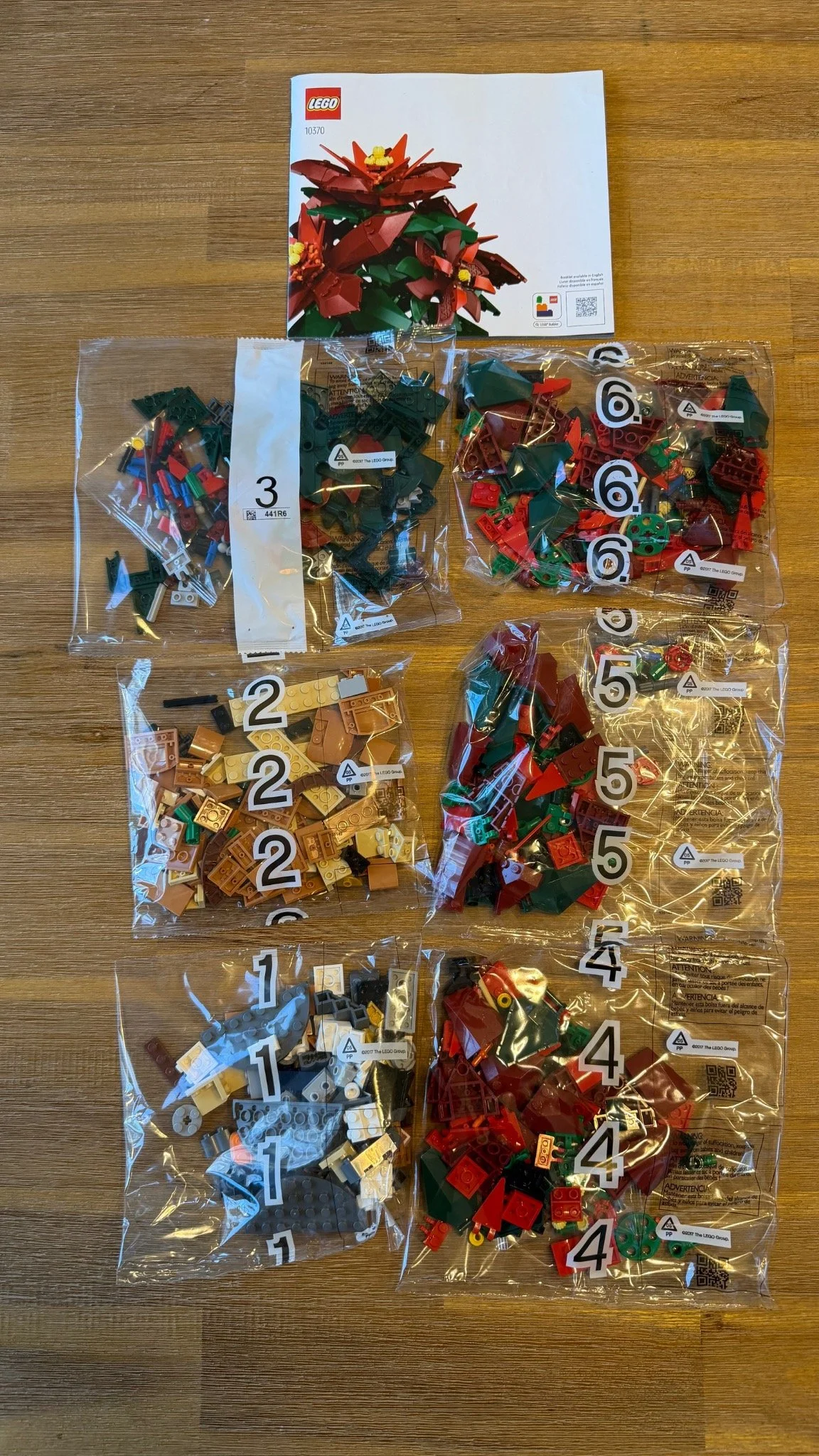
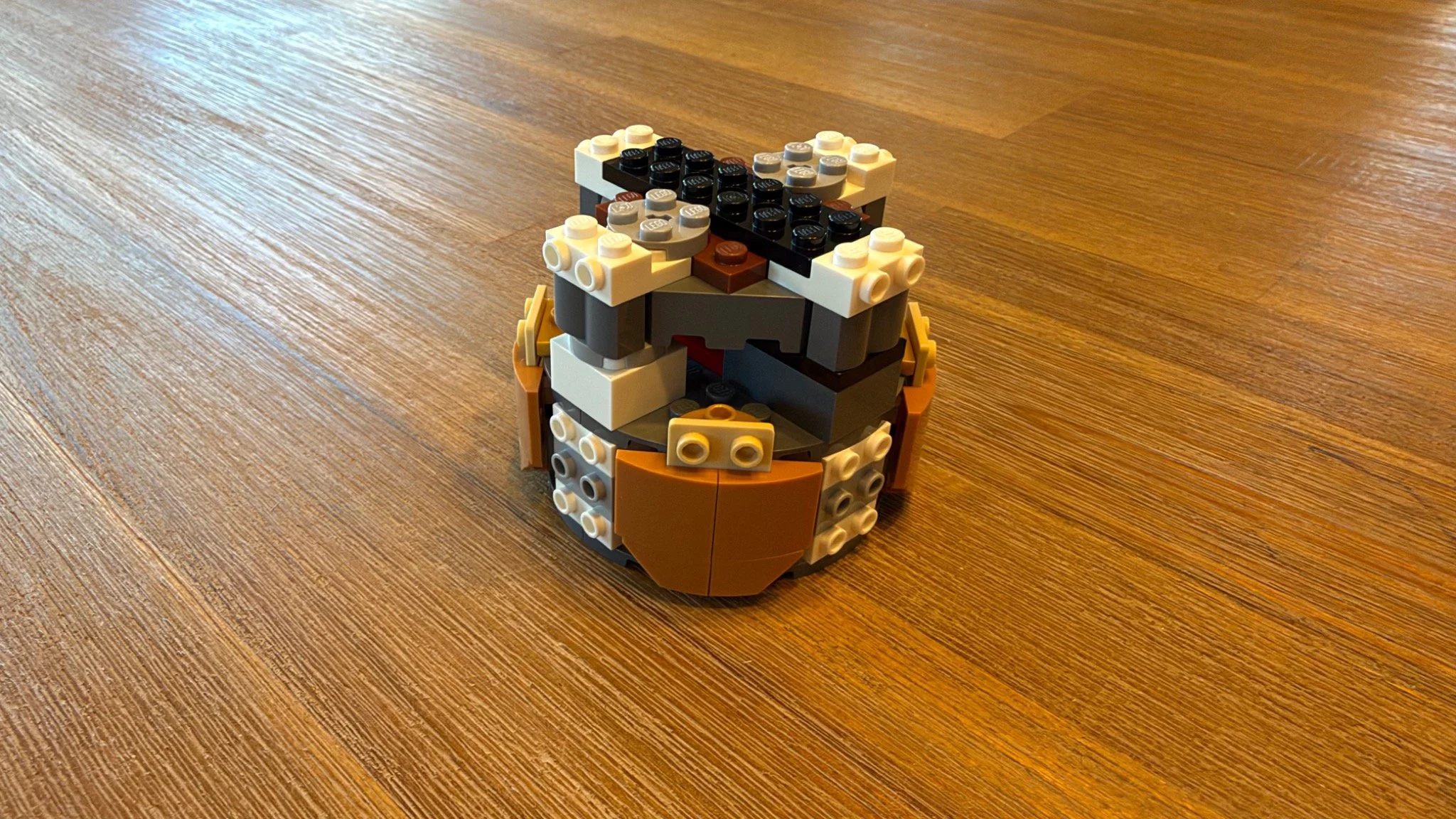
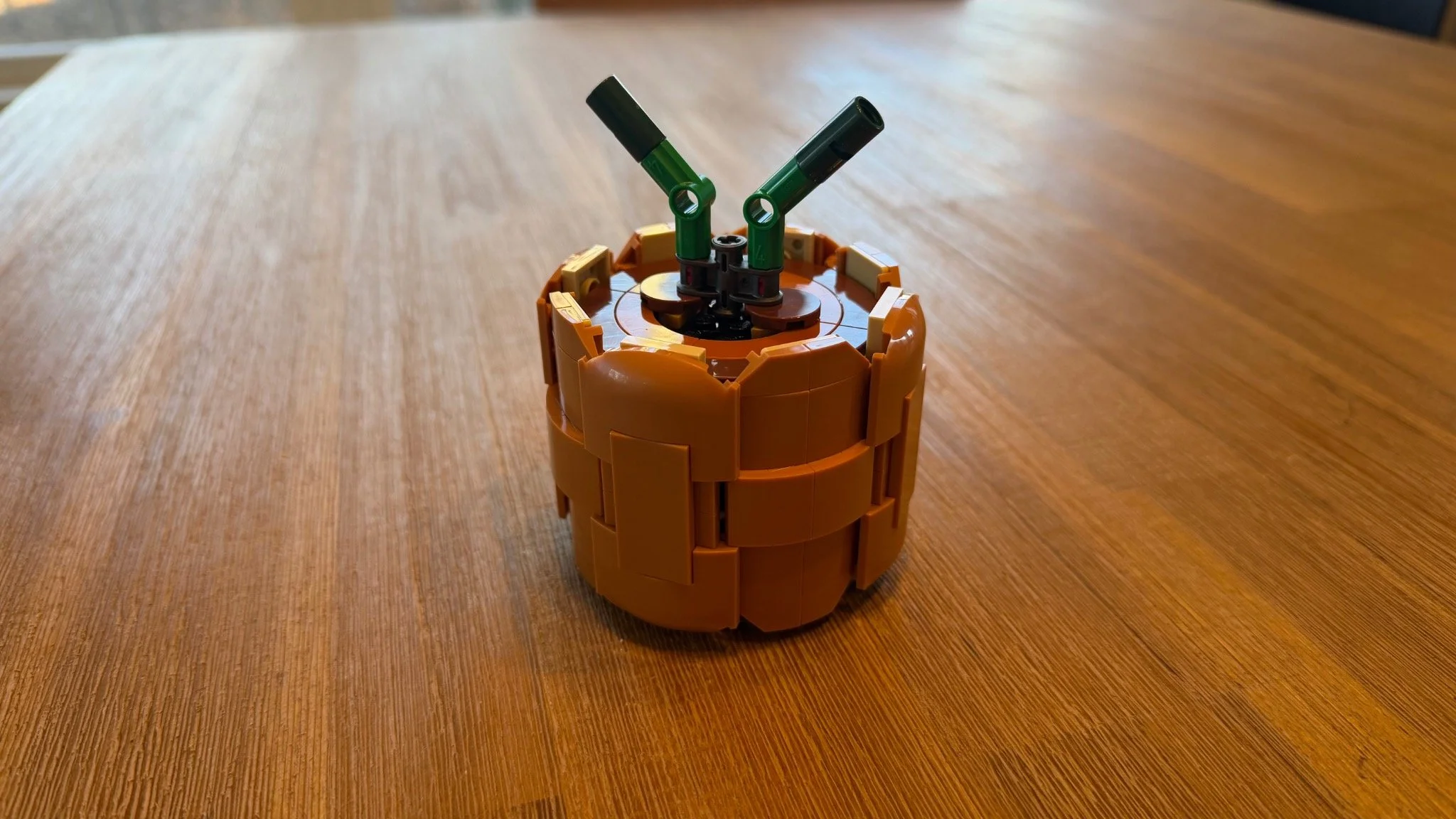
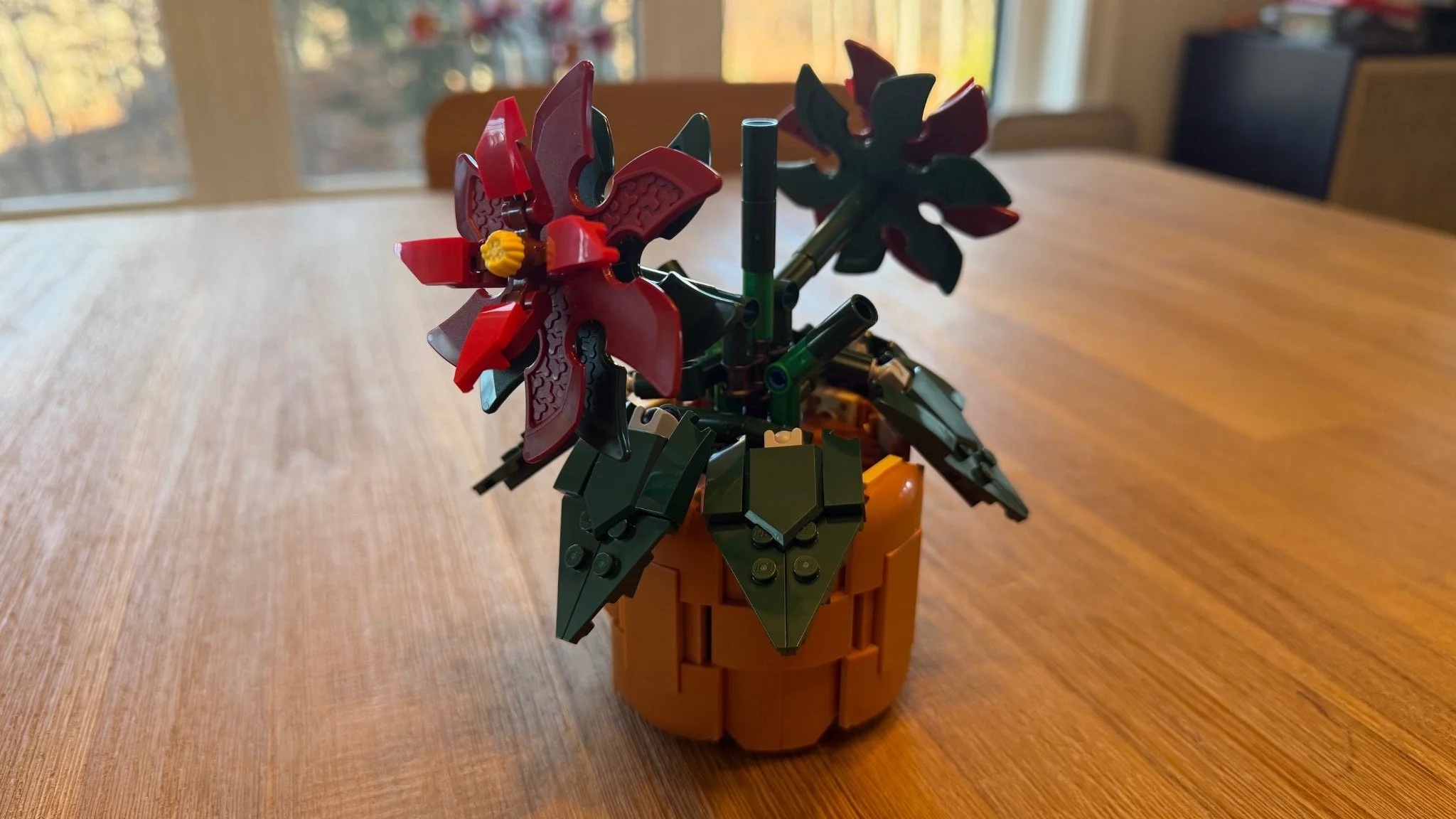
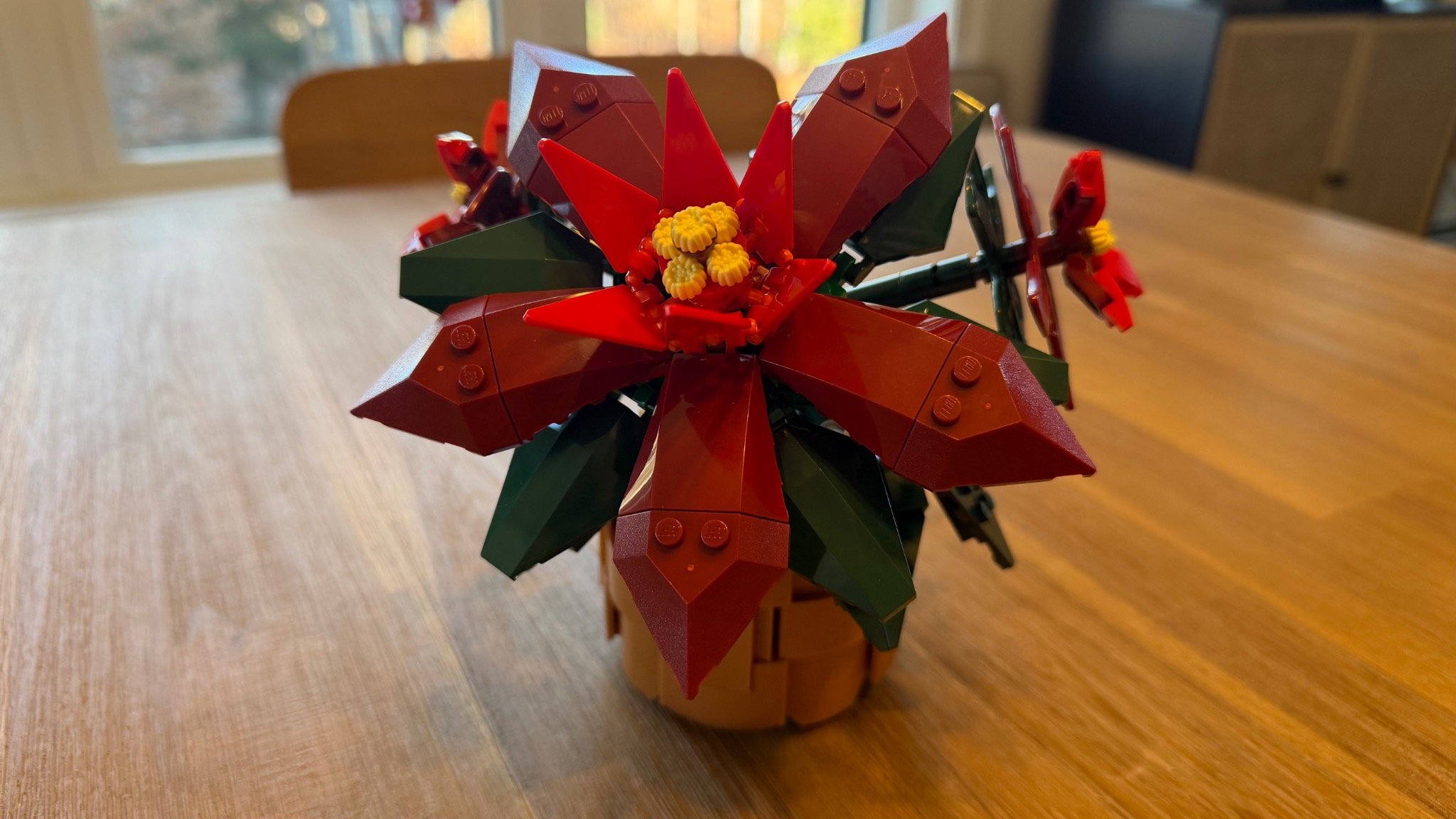
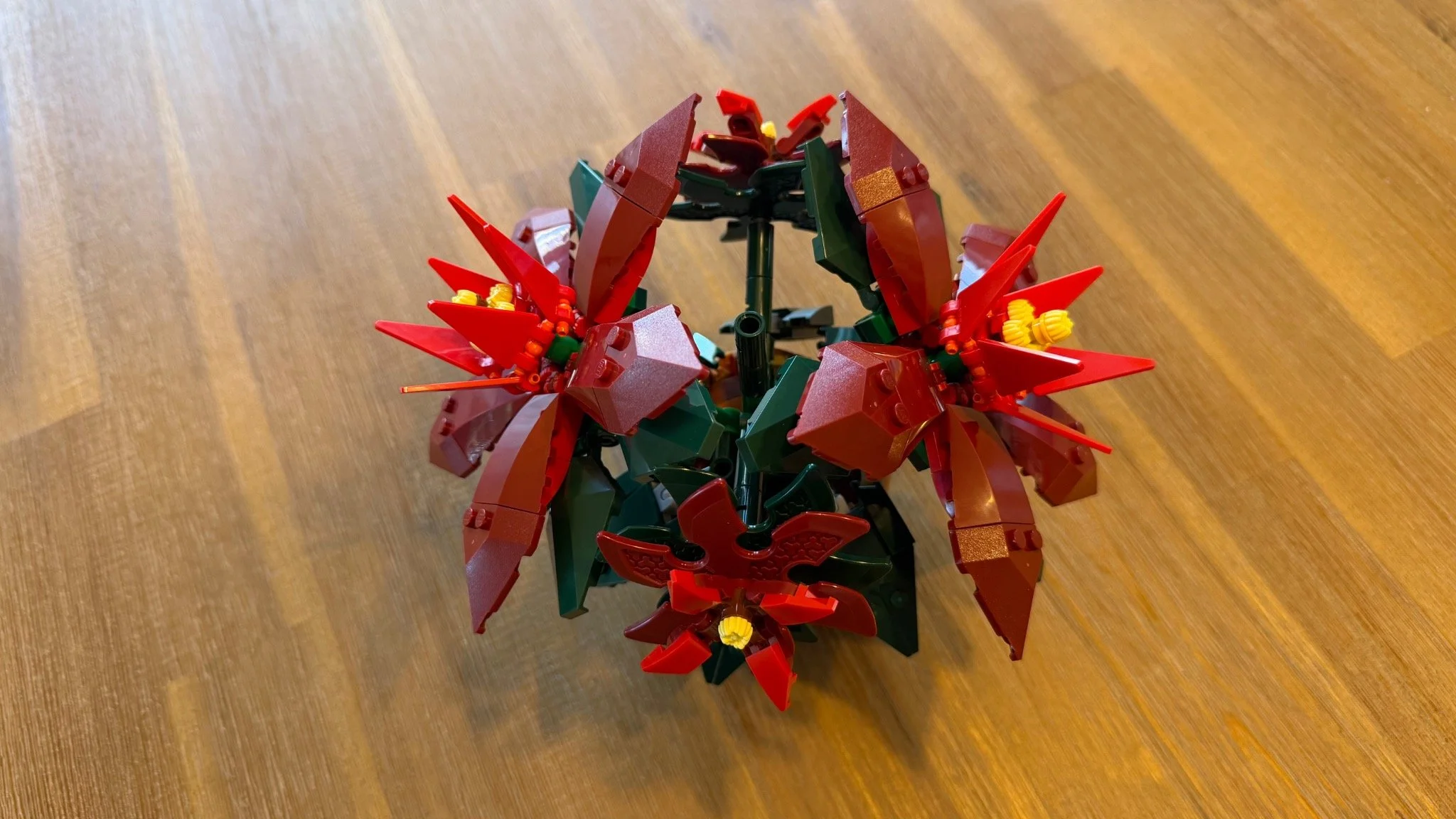
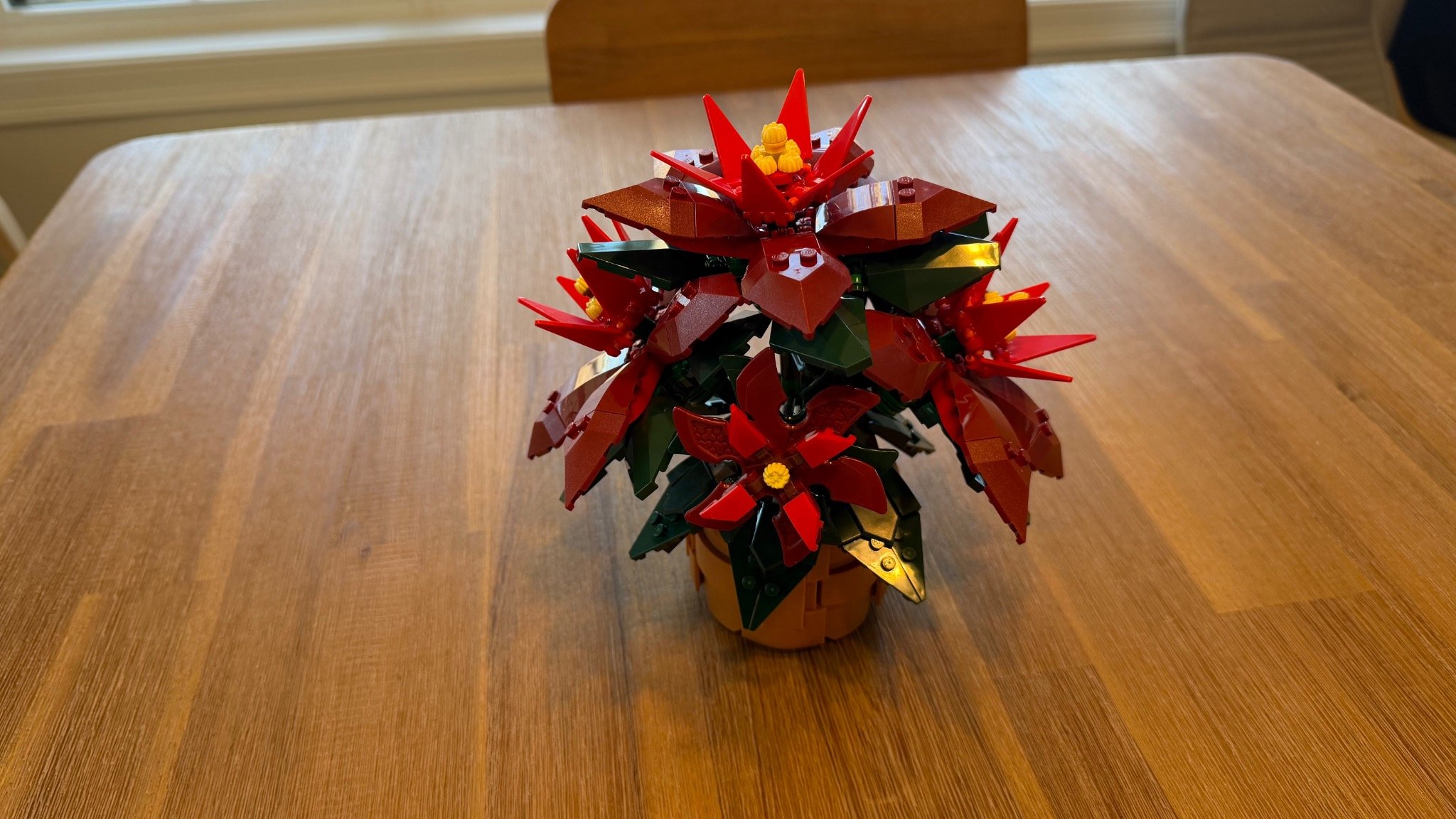
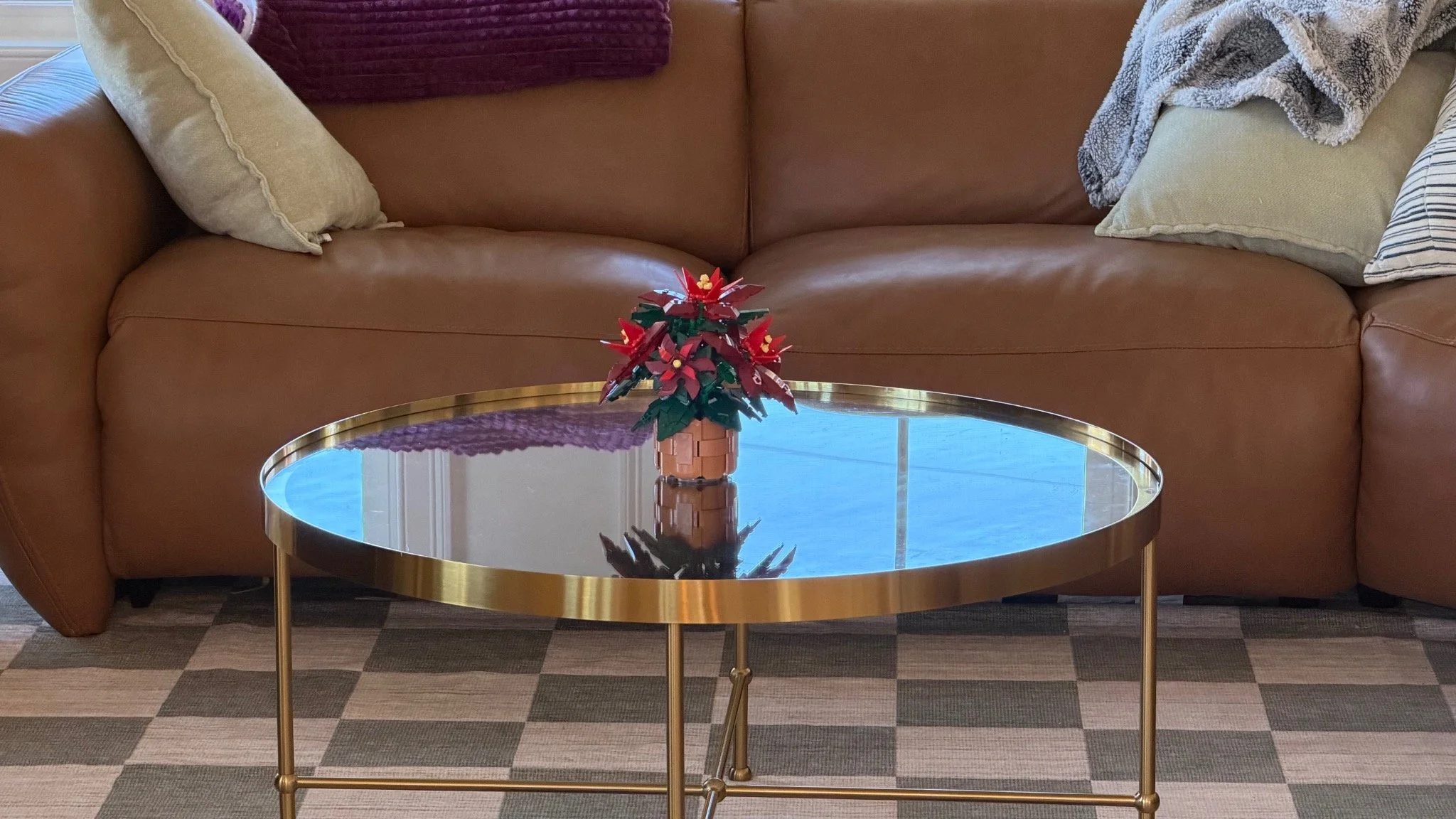
The slideshow follows the build from the numbered bags to the finished display. The sequence is: setup, pot frame, finished pot and first stems, green leaves and small flowers, first large flower, second large flower, completed plant, then the coffee-table display.
Details Worth Looking For
The pot deserves a closer look. Its curved outer panels turn the structural core into a finished container, and building that part was my favorite stretch of the set. The completed flowers then do a good job of balancing the dark red, brighter red and green.
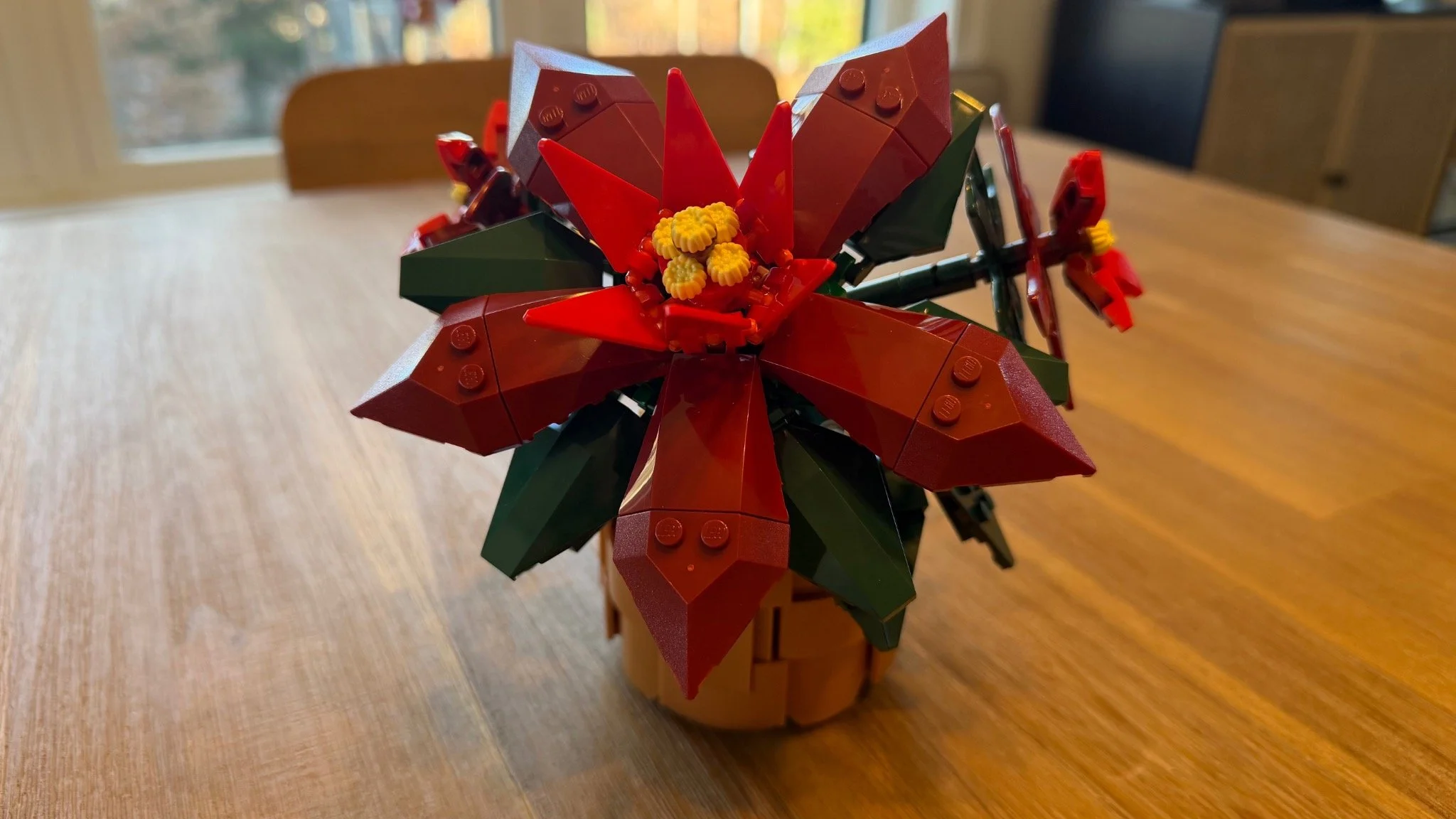
Bag 4: the first large flower, photographed before the remaining large flowers were added.
There is a small botanical distinction behind the familiar flower shape: the large red sections represent bracts, which are colored leaves, around the yellow centers. I have used “flower” throughout the build log for the complete assemblies, since that is the easiest way to describe what each bag creates.
The petals and stem leaves are movable, so there is some room to arrange the display. The final fitting can still be crowded. Adjustability is useful, but it does not mean every leaf will clear its neighbor in every position.
The coffee-table photo gives a better sense of the scale than a close-up alone. This is a compact decoration with enough color to stand out. I can see it working on our dining table or a countertop without needing the space of a much larger botanical arrangement.
Final Verdict
LEGO Poinsettia 10370 earns a 6.4/10 from me. I like the Christmas decoration more than the building experience. The pot was enjoyable, the finished plant captures the subject well, and the repeated large flowers keep it from being a set I am eager to build again.
What I Liked
A compact display with a clear seasonal purpose. It looks festive without demanding a large shelf or table, and I will be happy to bring it out for Christmas again.
The poinsettia shape and colors work. The large red clusters look good alongside the smaller flowers and green leaves.
The pot was satisfying to build. Bags 1 and 2 offered my favorite part of the process, even with repeated exterior sections.
A relatively approachable botanical build. Compared with other botanicals I have assembled, this one felt less challenging overall and less dominated by tiny pieces. The few firm connections are the main qualification.
What I Didn't Like
Three bags follow almost the same large-flower pattern. The final flower changes the proportions, but it does not bring much new building variety. If repetition drains your enthusiasm, the second half may feel longer than the time suggests.
Some small connections need both force and support. The adjustable leaf fittings, rotating connector and crowded top flower can be fiddly despite the simple sequence.
The value depends heavily on wanting the display. At the $28 I paid, the finished Christmas decoration makes more sense to me. At the $49.99 LEGO U.S. price checked on November 17, 2026, I would want a discount, particularly if the building experience were my main reason for buying.
I would recommend it most readily to someone who loves botanicals and specifically wants a Christmas plant for display. If you are looking for varied techniques throughout, it would be a harder recommendation. Would I build it again? For myself, no. Would I put it back on display every Christmas? Yes.
Related Reading
For another seasonal display, read my LEGO Christmas Table Decoration 40743 review. For a smaller plant-themed build, try my LEGO Cozy Plants 10371 review. You can also browse all my LEGO build reviews.
Need Help With Your Own LEGO Project?
Have a set waiting to be assembled, or a favorite display that needs rebuilding? Explore The Bricksmith’s services or send a few photos and tell me what you would like help with. I offer local pickup and return around Greater Portland, Maine, with select mail-in projects considered after assessment.